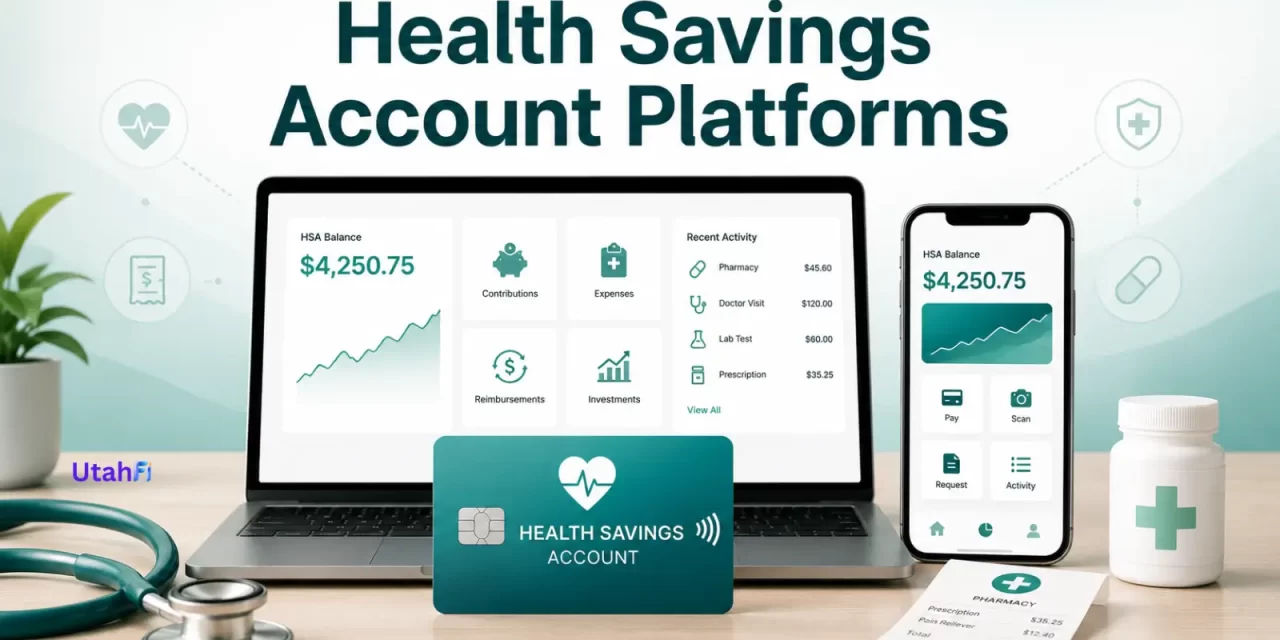
Health Savings Account Platforms: Managing Medical Finance
Health Savings Accounts, commonly called HSAs, are tax-advantaged accounts designed to help individuals save and pay for eligible medical expenses.
Health Savings Account platforms are financial systems built around these accounts to help users manage healthcare savings, medical spending, reimbursements, and healthcare-related financial activity more efficiently.
Healthcare costs have become a larger part of personal financial planning, creating demand for systems that help people organize healthcare-related finances more effectively. Instead of functioning only as basic savings accounts, modern HSA platforms combine healthcare savings, payments, expense tracking, reimbursements, and financial management tools into a more connected experience.
While HSAs originally focused mainly on saving money for qualified medical expenses, modern HSA platforms expanded the role of these accounts by helping users actively manage healthcare finances digitally. The shift reflects a broader movement in financial services toward more connected, centralized, and real-time financial management systems.
In Simple Terms
Health Savings Account Platforms are tools that help people manage money for healthcare expenses.
It allows users to save money for medical costs, track healthcare spending, pay eligible expenses, and monitor balances from one place. Instead of separating healthcare savings from healthcare payments, the platform connects everything into a more organized financial system.
The experience becomes more like managing a regular financial account, but focused specifically on healthcare expenses.

What Changed (Before vs Now)
Before modern Health Savings Account platforms, HSAs often worked more like basic savings accounts for medical expenses.
People could save money for healthcare costs, but the overall experience was usually disconnected. Checking balances, paying medical bills, tracking expenses, storing receipts, and managing reimbursements often happened across different systems.
Many users treated HSAs as passive accounts instead of active financial tools.
Modern Health Savings Account platforms changed that by turning healthcare savings into a more connected financial experience. Users can now manage healthcare savings, medical spending, reimbursements, and payments from one place.
Instead of simply holding money for future healthcare expenses, HSA platforms now help users actively manage healthcare-related finances digitally.
Before:
- Basic healthcare savings account
- Manual expense tracking
- Separate payment and reimbursement systems
- Limited financial visibility
- Passive healthcare savings
Now:
- Connected healthcare finance platform
- Real-time balance and transaction tracking
- Integrated healthcare payments
- Centralized financial management
- More active healthcare financial planning
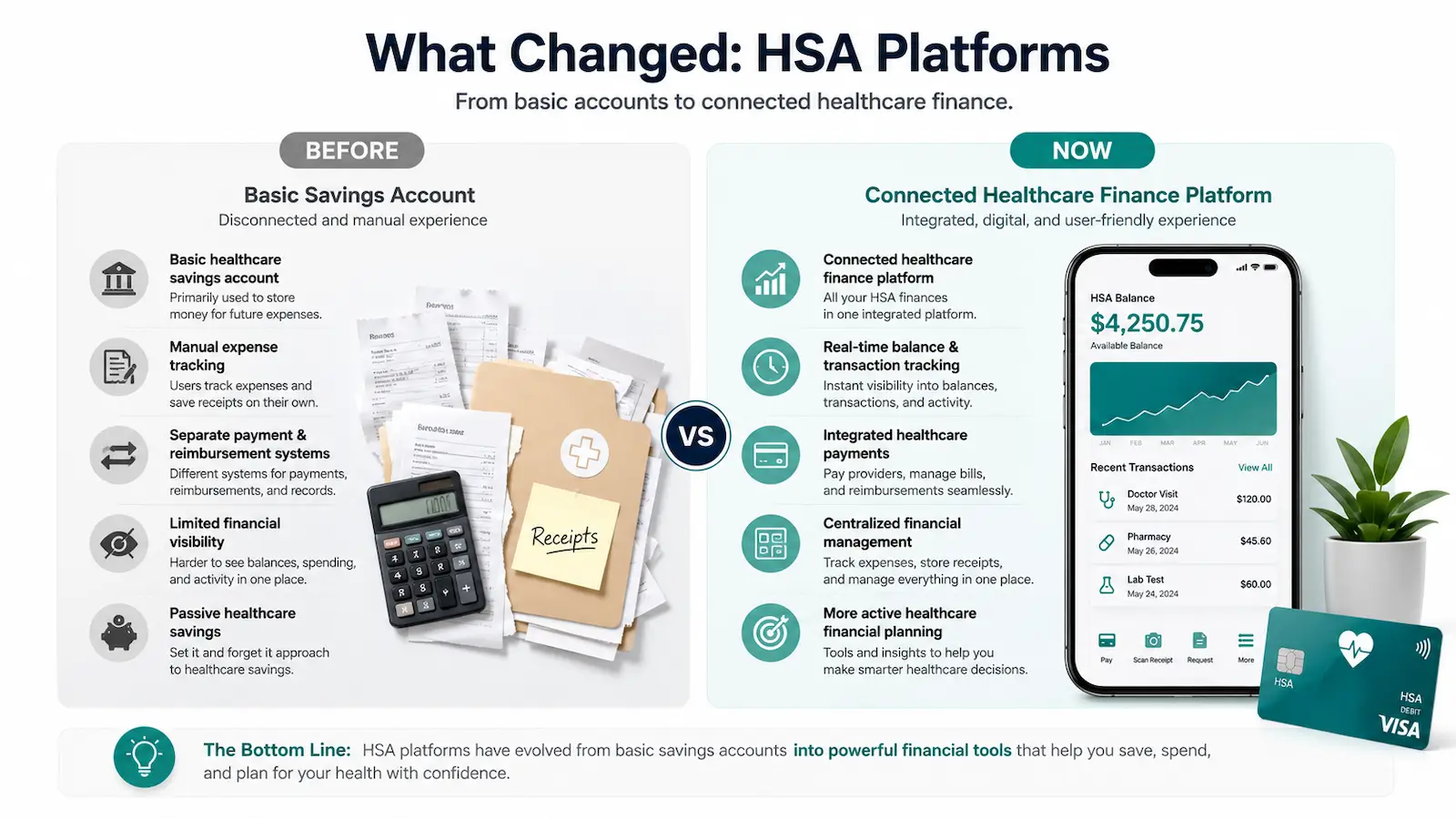
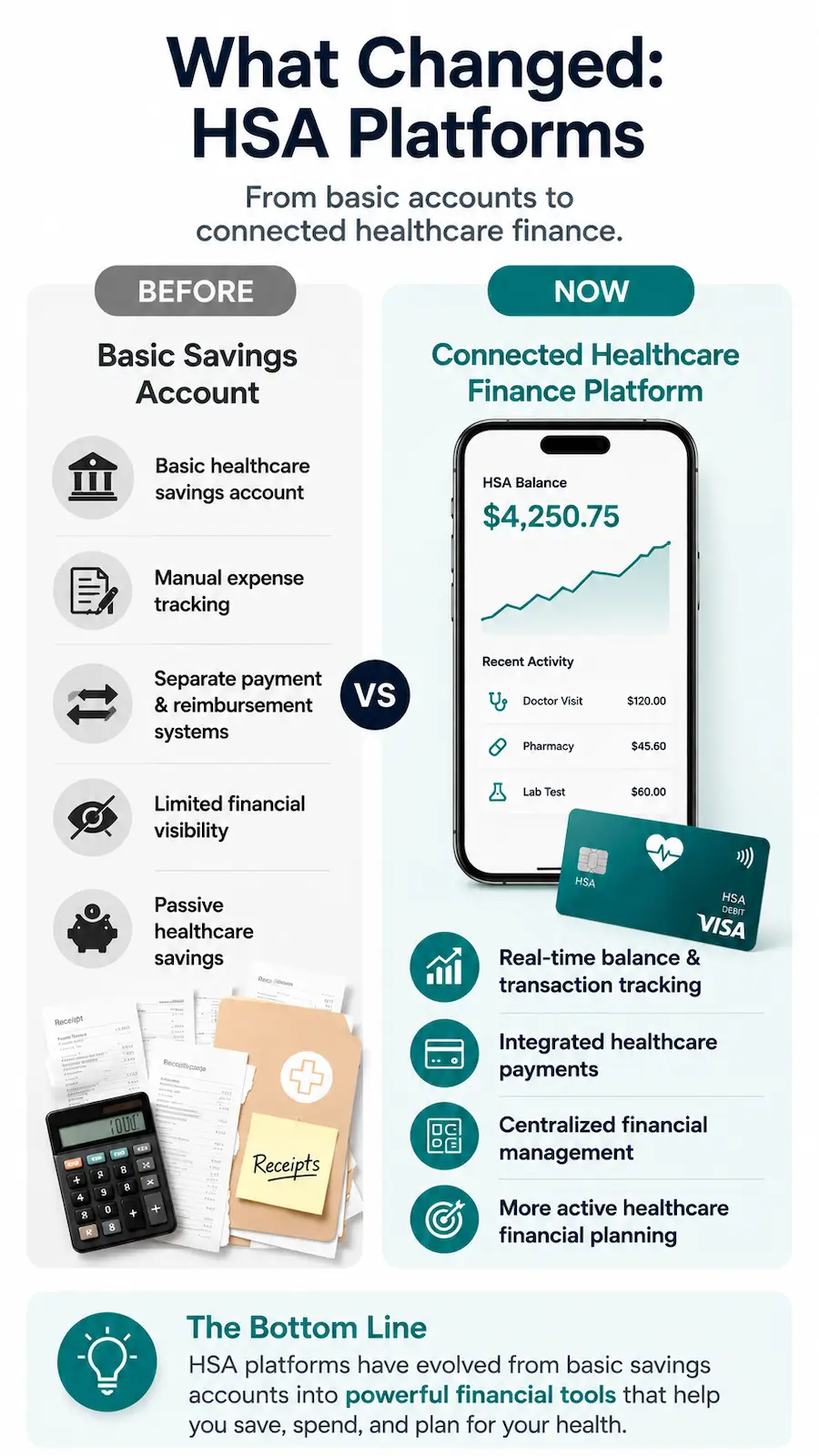
Health Savings Account Platforms Before vs Now
Examples of Health Savings Account Platforms
Modern Health Savings Account platforms support a variety of healthcare-related financial activities, including:
- Tracking healthcare and medical expenses
- Paying healthcare bills through digital systems
- Monitoring HSA balances and contribution activity
- Organizing healthcare savings and spending in one place
- Reviewing transaction history for eligible expenses
- Managing healthcare-related financial planning digitally
Some platforms also include debit cards, reimbursement systems, investment options, and mobile access that allow users to manage healthcare finances more actively than in the past.
Instead of functioning only as savings accounts, Health Savings Account platforms now operate more like healthcare financial management systems that help users organize and manage healthcare-related finances from one place.
How Health Savings Account Platforms Work
At a high level, Health Savings Account platforms combine healthcare savings management with healthcare expense tracking.
Funds are stored in an HSA account and can be used for eligible medical expenses. The platform tracks balances, transactions, and contribution activity while organizing financial information in a centralized system.
Modern HSA platforms typically help users:
- Track HSA balances and contributions
- Monitor healthcare spending activity
- Pay eligible medical expenses
- Organize receipts and reimbursements
- Review transaction history
- Manage healthcare-related finances from one place
Instead of managing healthcare savings, payments, and reimbursements separately, HSA platforms bring these financial activities together into one connected system.
The broader movement toward organizing and structuring financial information across connected systems reflects trends seen throughout financial technology. For a deeper explanation, see Financial Data Aggregation: The Rise of Connected Financial Data.
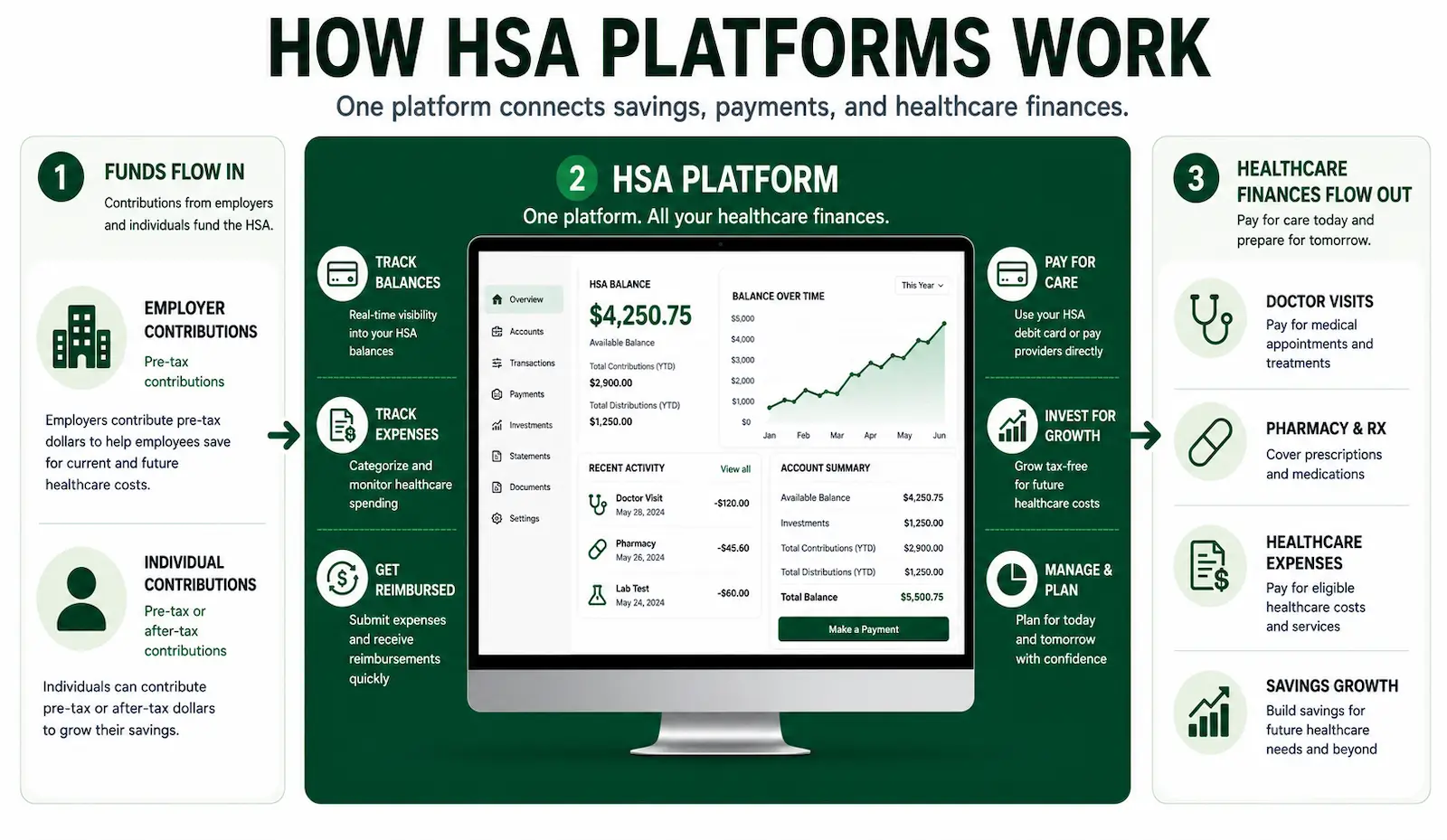
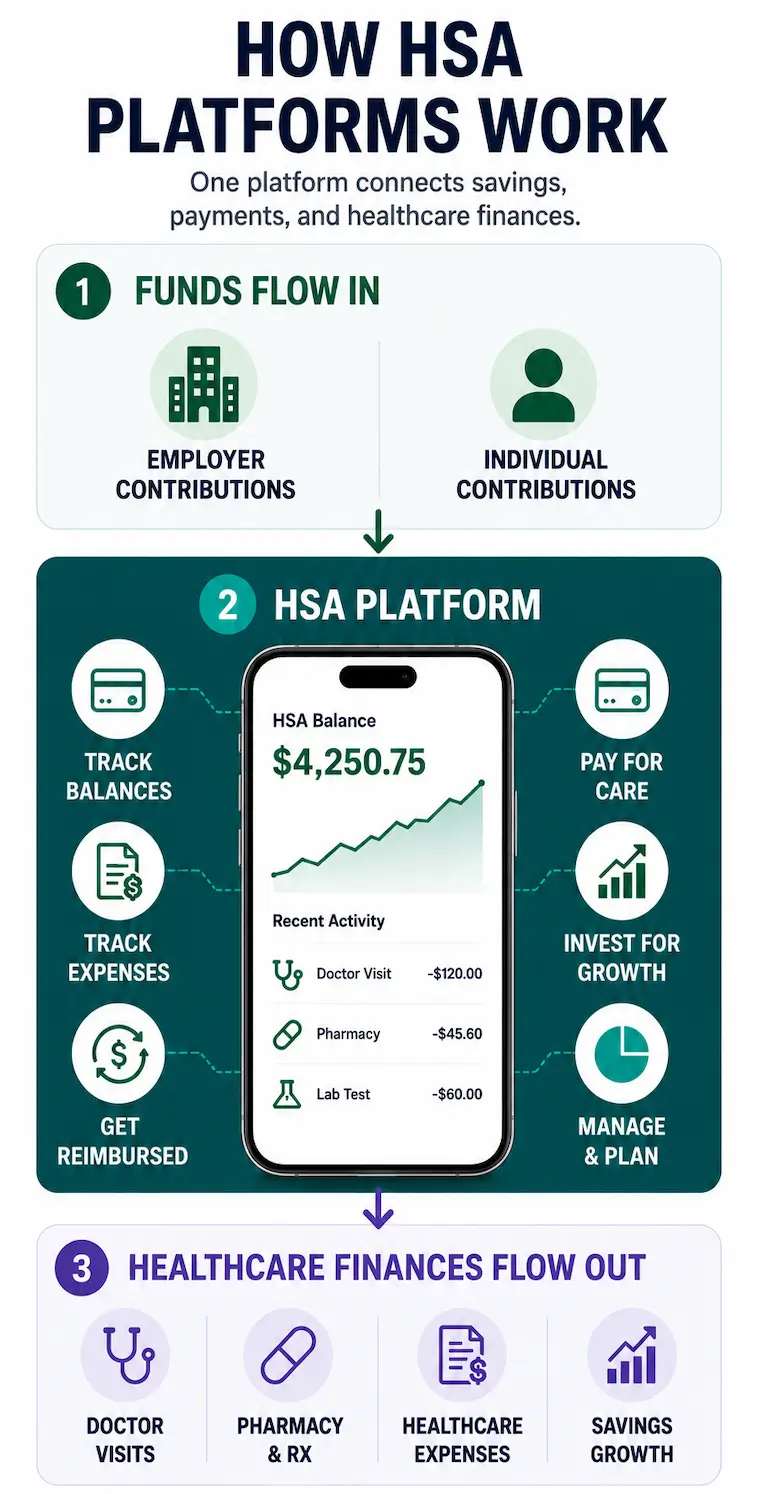
How Health Savings Account Platforms Work
Key Players and Competitors
Several companies provide HSA platforms and healthcare financial management systems for individuals, employers, and healthcare-related financial services.
Utah-based companies
 HealthEquity — Healthcare savings and HSA management platform headquartered in Draper, Utah.
Other companies in this space
- Optum Financial — Healthcare financial services and HSA platform provider.
- Fidelity Investments — HSA accounts with healthcare savings and investment management tools.
- Lively — Digital HSA management and healthcare expense tracking platform.
- HSA Bank — HSA-focused banking and healthcare savings platform.
Why It Matters
Healthcare expenses can be difficult to manage, especially when payments, reimbursements, savings, and medical records exist across separate systems.
Health Savings Account platforms help improve visibility into healthcare-related finances by bringing more information together in one place. Users can better understand how much they are saving, spending, and allocating toward medical costs over time.
This can support stronger financial planning, improve organization around healthcare expenses, and reduce some of the friction between healthcare payments and healthcare savings. Health Savings Account Platforms also depend on connected financial information, which is explored in Financial Data Aggregation: The Rise of Connected Data.
The innovation is not simply the HSA account itself. The larger shift is the development of financial systems that help users manage healthcare finances more actively and efficiently.

HSA Platforms and Embedded Finance
Health Savings Account platforms also reflect the growth of embedded financial services inside healthcare-related experiences.
Instead of existing separately from healthcare systems, healthcare savings tools increasingly connect directly with healthcare payments, reimbursements, providers, and financial management systems. This creates a more connected healthcare finance experience for users.
Many modern HSA platforms combine healthcare savings, payment tools, reimbursements, and account management into a single financial workflow rather than separating these activities across different systems.
As explained in Embedded Finance: How Financial Services Move Into Apps, financial services increasingly operate inside the platforms and experiences people already use.
Limitations
Despite their advantages, Health Savings Account platforms still have limitations.
- HSAs are limited to eligible healthcare-related expenses
- Users must understand healthcare savings rules and eligibility requirements
- Not all individuals qualify for HSA accounts
- Experiences can vary depending on the platform provider
- Healthcare and financial systems may still remain partially disconnected
For some users, healthcare reimbursement rules, contribution limits, and eligible expense requirements can still create confusion even with improved financial management tools.

What’s Next (Future of Health Savings Account Platforms)
Health Savings Account platforms are likely to become more integrated with broader healthcare and financial ecosystems over time.
Future developments may include:
- More connected healthcare-finance systems
- Improved expense tracking and financial organization
- Better tools for healthcare financial planning
- Stronger integration with healthcare providers and insurers
- Expanded digital experiences across mobile and online platforms
As healthcare costs continue to play a larger role in personal financial planning, Health Savings Account platforms may evolve into more comprehensive healthcare financial management systems rather than simple healthcare savings accounts.
Conclusion
Health Savings Account platforms represent a shift from basic healthcare savings accounts to more connected healthcare financial management systems.
What once functioned primarily as a passive savings tool has evolved into a platform that helps users track healthcare spending, manage payments, organize financial information, and monitor healthcare savings from one place.
The innovation is not only about storing money for healthcare expenses. It is about creating more connected financial systems that help individuals manage healthcare finances more efficiently.

Disclaimer: Information in this article is for educational purposes and may change over time.