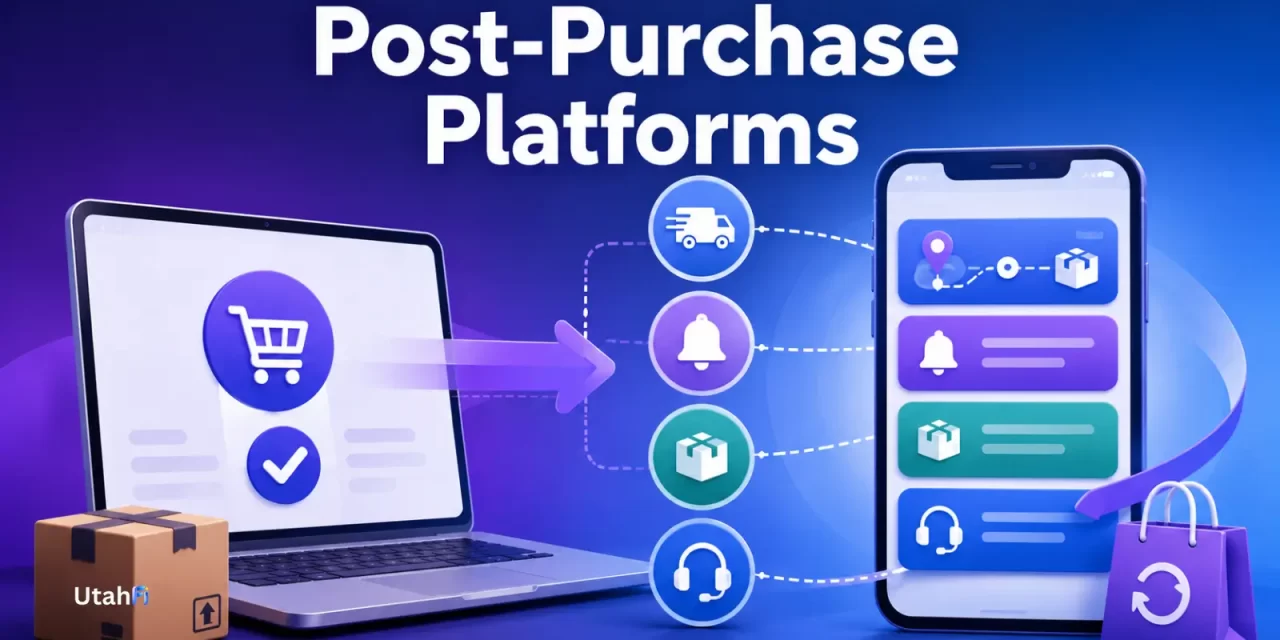
What Are Post-Purchase Platforms
Post-purchase platforms are systems that manage what happens after a customer completes a purchase—and they are increasingly becoming part of financial innovation in e-commerce.
These platforms bring together tracking, delivery updates, returns, and customer communication into a single experience, instead of leaving these steps fragmented across emails, shipping carriers, and support channels.
They connect to finance by shaping what happens after a transaction is completed. When issues occur—such as lost packages or returns—these platforms guide the processes that lead to refunds, replacements, or resolutions. They play a role in how financial outcomes are handled after a transaction, even if they do not directly control the money itself.
In the past, once a payment was completed, the process moved across separate systems. Today, post-purchase platforms centralize that experience, giving both merchants and customers better visibility, control, and financial clarity after a purchase.
They act as a centralized layer between merchants, logistics providers, and customers, similar to how loan marketplaces connect borrowers with multiple lenders.
In Simple Terms
After you paid for something online, the experience used to stop.
Updates came through emails or tracking links, and if something went wrong, you had to handle it yourself.
Now, post-purchase platforms act like a control center for your order, bringing tracking, updates, and issue resolution together.

What Changed (Before vs Now)
The shift is about how the experience after checkout is managed.
How This Already Exists on Amazon
Many readers have already experienced a version of this through Amazon.
Amazon handles the post-purchase experience in-house, meaning everything after checkout—tracking, updates, returns, and support—is managed within its own system.
This creates a smooth, integrated experience, where customers do not have to rely on separate tools or services.
Unlike Amazon, which manages the experience in-house, most other online stores use post-purchase platforms to centralize tracking, updates, returns, and support.
Before:
- Payment ended the experience
- Tracking, returns, and support were separate
- Updates came from different sources
- Customers had limited visibility
Now:
- The experience continues after checkout
- Tracking, updates, and support are centralized
- Communication is proactive and real-time
- Customers have more visibility and control
Post-purchase platforms make this possible by connecting systems that were previously disconnected, while also helping coordinate the processes that lead to financial outcomes such as refunds or replacements.
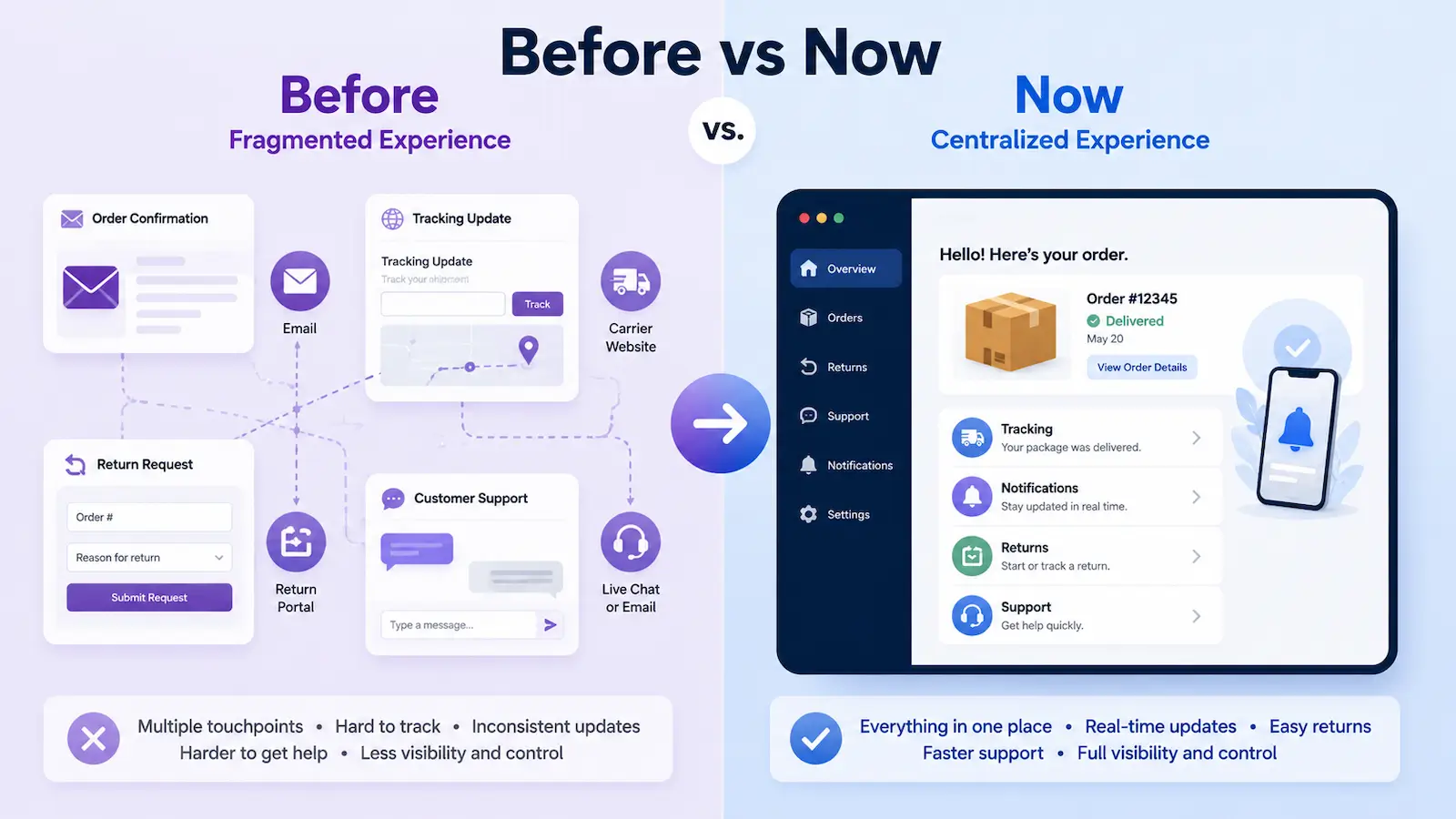
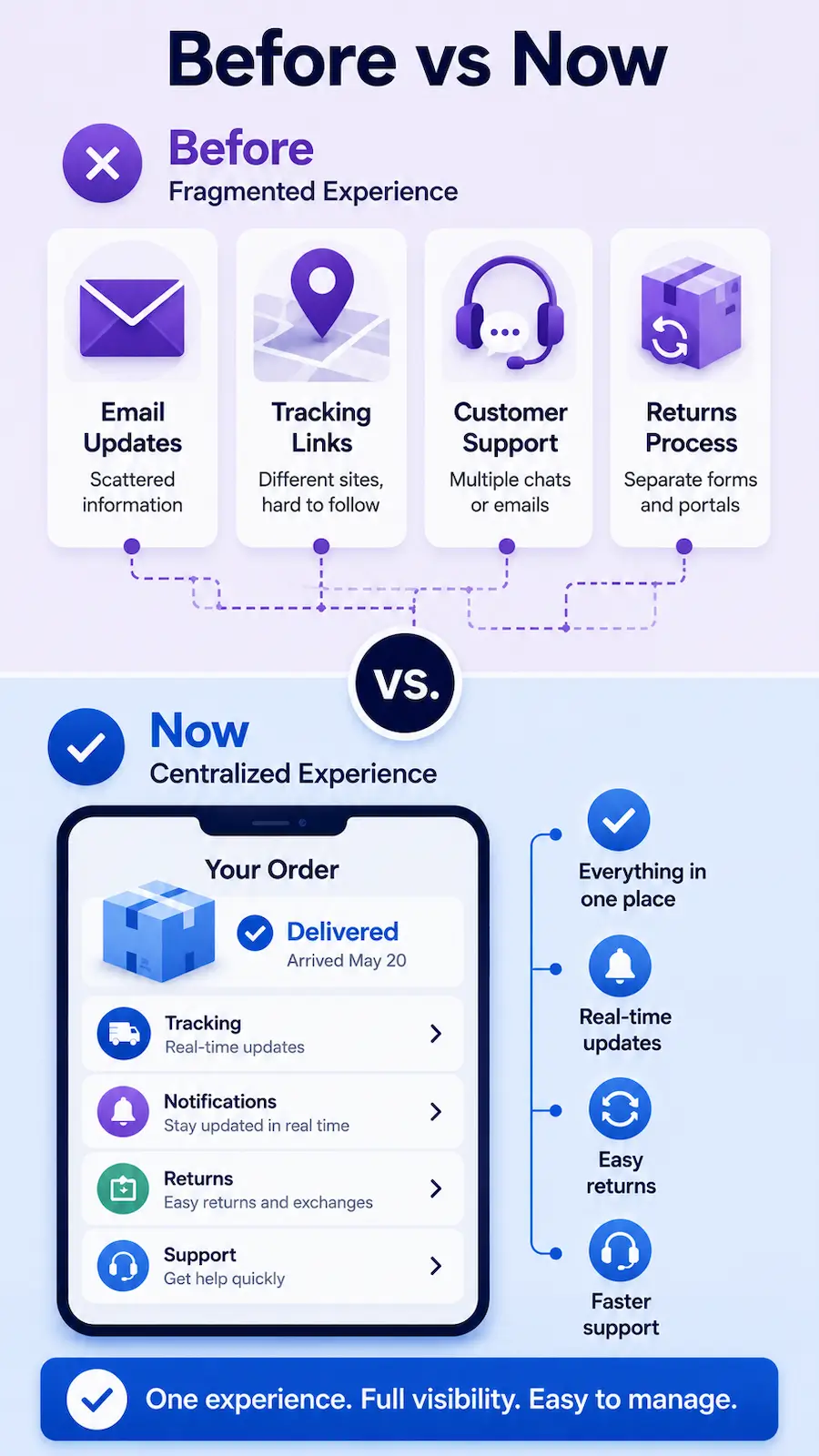
Post-Purchase Platforms Before vs Now
Examples of Post-Purchase Platforms
These platforms typically provide a combination of features that manage the experience after checkout.
- Centralized tracking — view all order updates in one place
- Delivery notifications — receive real-time alerts about shipping status
- Returns management — initiate and track returns through a guided process
- Customer communication — receive updates and support in a consistent format
Together, these features create a single, managed experience after checkout, replacing what used to be a fragmented process across multiple systems.
How Post-Purchase Platforms Work
At a high level, these platforms connect the customer, merchant, shipping carrier, and support systems into a single experience.
- Order data is captured during checkout
- Shipping information is pulled from logistics providers
- Updates are delivered through a centralized interface
- Returns and support are handled through integrated workflows
- Communication is automated and consistent
This creates a single layer that sits on top of the purchase process, simplifying everything that happens after payment and helping coordinate how issues are resolved.
Like marketplaces, these platforms sit between multiple systems, simplifying complex processes into a single user experience.
Post-purchase platforms manage the experience—someone else usually carries the financial risk, such as the retailer itself or a separate insurance provider behind the scenes.
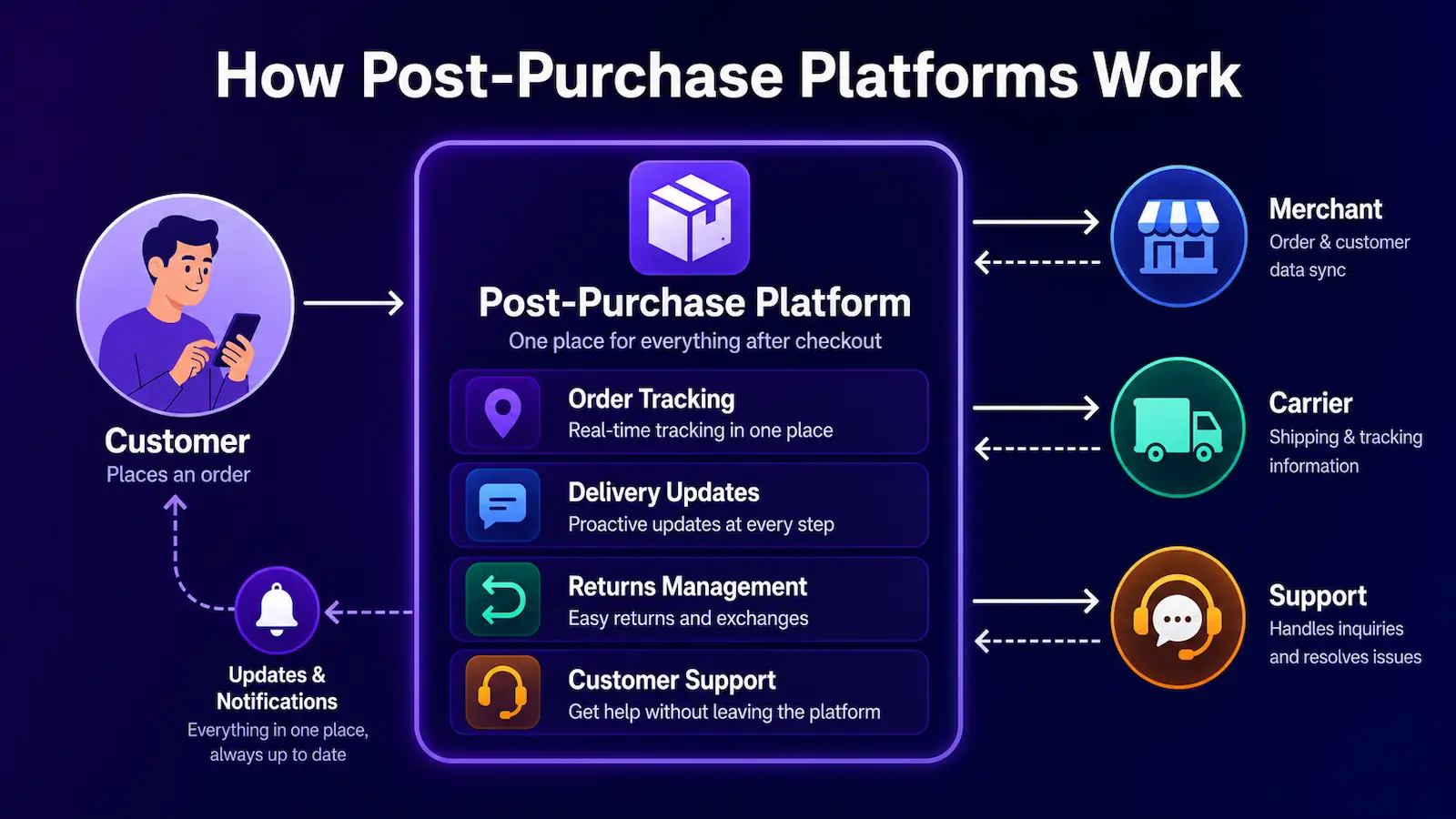
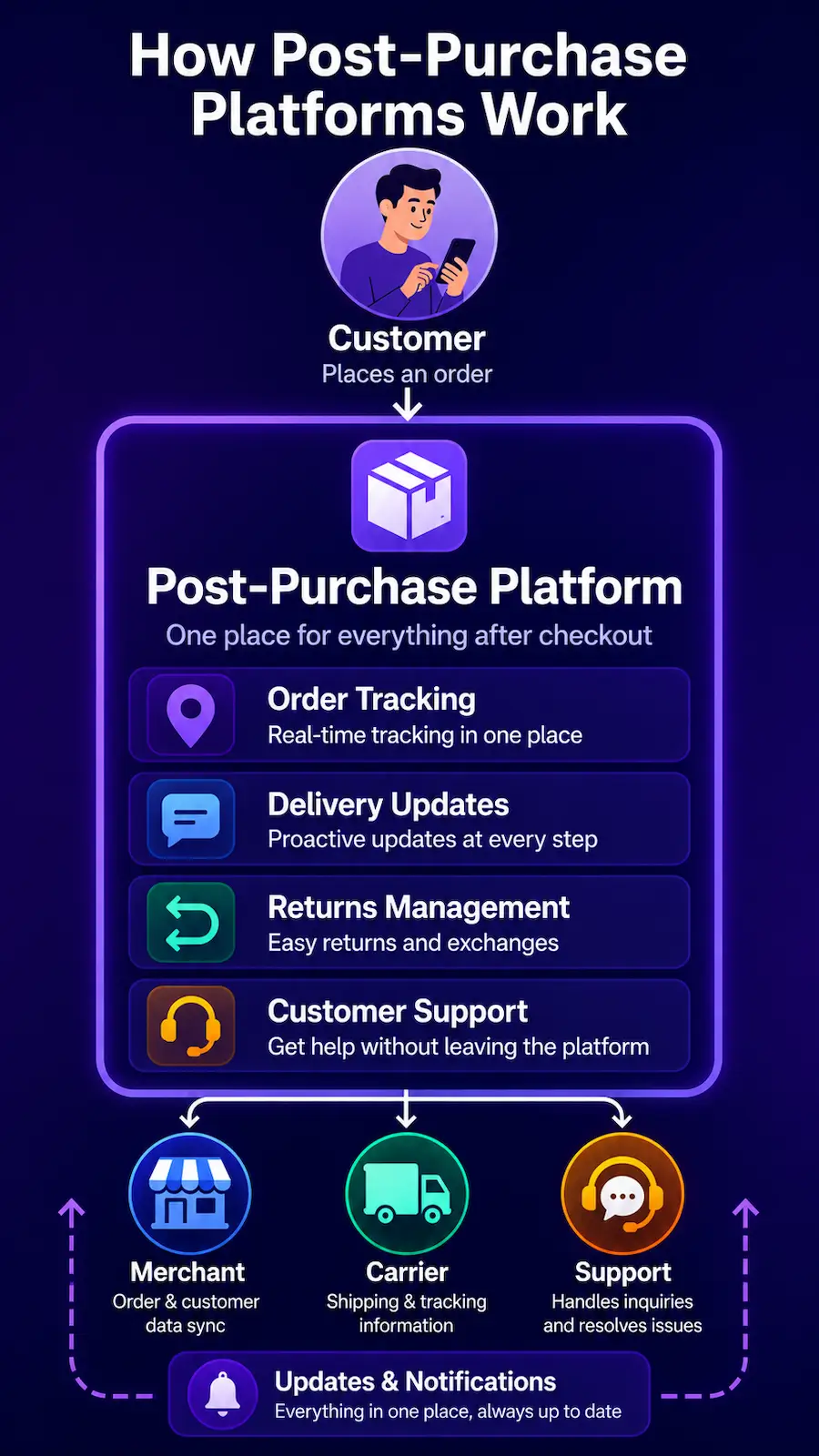
How Post-Purchase Platforms Work
Key Players and Competitors
Several companies are building post-purchase platforms that help merchants manage the customer experience beyond checkout. These platforms focus on tracking, returns, and communication, and in some cases include additional features that support issue resolution.
Utah-based companies
 Route — provides centralized tracking, notifications, and additional features within the post-purchase experience
Other companies in this space
Why It Matters
Post-purchase platforms improve how people experience online shopping.
- Simplifies the experience after checkout
- Reduces confusion around shipping and returns
- Improves communication between merchants and customers
- Creates a more reliable experience across different stores
Instead of dealing with multiple systems, customers interact with a single, unified experience.
Post-purchase platforms are not financial tools in the traditional sense, but they become part of financial services when they manage what happens to money after a purchase. When issues occur—such as lost packages or returns—these platforms help guide whether a customer receives a refund, replacement, or resolution, making them part of how financial outcomes are handled.
They also help businesses manage risk and cost, reducing the financial impact of delivery problems and customer support.
In this way, post-purchase platforms sit at the intersection of customer experience and financial decision-making, which is why they are increasingly considered part of the broader fintech landscape.

Post-Purchase Platforms and Embedded Finance
Post-purchase platforms are part of a broader shift where services are integrated directly into digital experiences.
In Embedded Finance: How Financial Services Are Moving Inside Apps, financial services are no longer separate from the apps and platforms people use—they are built directly into them.
In this case, post-purchase platforms integrate tracking, communication, and related workflows into a single experience layer, reducing the need for separate tools after checkout.
Post-Purchase Platforms and AI in Finance
Artificial intelligence is improving how post-purchase platforms operate.
AI is increasingly used to recognize patterns, make decisions automatically, and handle repetitive tasks without human involvement—a broader shift covered in AI in Finance: How Artificial Intelligence Is Changing Money.
In post-purchase platforms, AI can:
- Predict delivery times more accurately
- Detect potential issues earlier
- Improve communication timing and content
- Automate parts of the support process
This makes the experience faster and more responsive, especially when handling issues that may lead to financial outcomes.
Limitations
Post-purchase platforms still have limitations.
- Dependence on integrations — these platforms rely on connections with merchants, shipping carriers, and support systems, which can vary in quality and reliability
- Inconsistent experience across stores — not all retailers use the same platform or offer the same features, so the experience can feel different from one purchase to another
- Data privacy concerns — tracking orders and managing communication requires collecting and sharing customer data across multiple systems
- Limited control over outcomes — platforms help manage the process, but final decisions—such as refunds or replacements—are often made by the retailer or other providers
These limitations show that the space is still evolving. While post-purchase platforms improve the experience, they do not fully standardize it across all purchases.

What’s Next (Future of Post-Purchase Platforms)
Post-purchase platforms are still evolving, but the direction is clear.
- Deeper integration into online stores — these platforms will become more embedded in the checkout and post-checkout experience, making them less visible but more essential
- More automation across the process — from tracking to returns and support, fewer steps will require manual input from customers or businesses
- Expansion of features beyond tracking and returns — platforms may include more tools related to communication, support, and issue resolution
- Greater use of data and AI — platforms will continue using data to predict issues earlier and personalize the post-purchase experience
While these platforms focus on what happens after checkout, many are starting to extend earlier in the journey by helping set expectations before a purchase is completed, such as delivery timing and return policies.
Over time, post-purchase platforms may become a standard layer in e-commerce, similar to how payment systems became essential for completing a purchase.
Conclusion
Post-purchase platforms represent a shift from transactions ending at checkout to experiences that continue afterward.
By centralizing tracking, communication, and support, these platforms replace what used to be a fragmented process across multiple systems.
They also play a role in coordinating financial outcomes, such as refunds and resolutions, even if they do not directly control the money itself.
As this space evolves, post-purchase platforms are becoming a standard layer in e-commerce, making the experience after checkout more connected, predictable, and easier to manage.

Disclaimer: Information in this article is for educational purposes and may change over time.