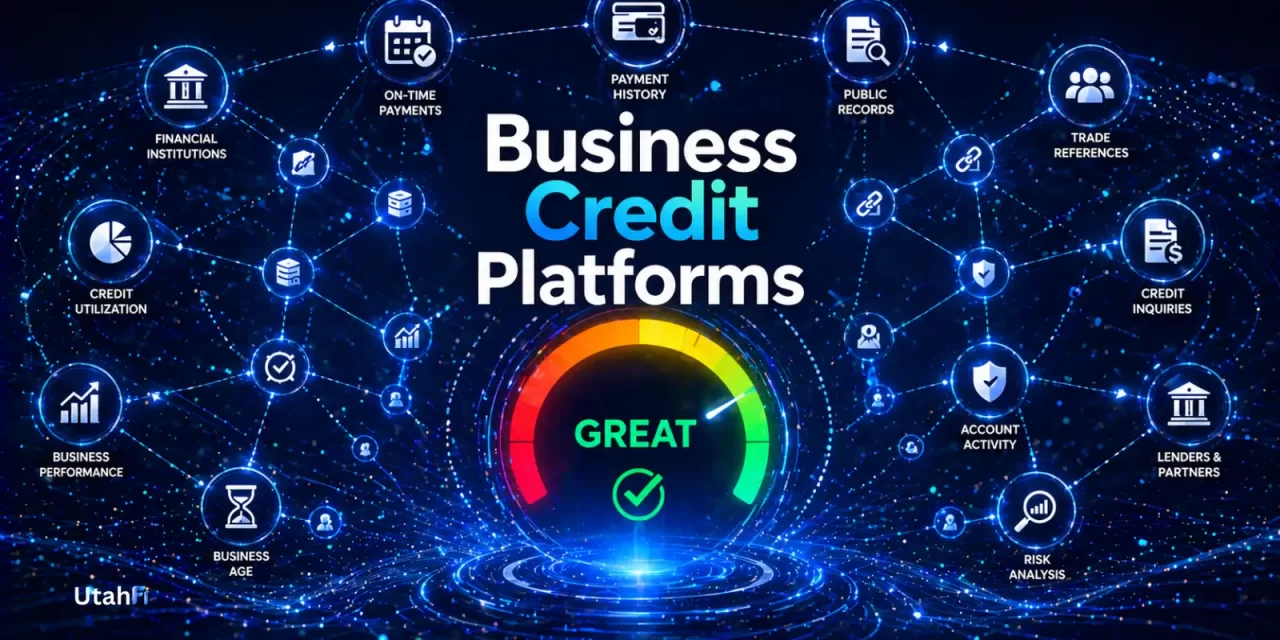
What Are Business Credit Platforms
Business credit platforms are tools that help companies track, understand, and manage their credit profile, but they are not the same as credit bureaus or scoring models.
For many people, familiar names like FICO and Experian represent personal credit. These play two different roles: FICO creates the score, while Experian provides the data and credit report.
Business credit platforms sit on top of both of these layers.
They do not create the official score and they are not the original data source. Instead, they connect to multiple credit systems, bring the information together, and present it in one place, allowing businesses to see their full credit picture, monitor changes, and take action before applying for financing.
In Simple Terms
Think of a business credit platform like a report card for your business, showing how trustworthy it looks when it wants to borrow money.
Without it, you would have to check different places one by one, and each one might show something different. That can be confusing and easy to miss problems.
A business credit platform puts everything in one simple dashboard, so you can see your credit, understand it, and fix issues before applying for financing.

What Changed (Before vs Now)
In the past, business credit was fragmented and difficult to access.
Companies often relied on:
- Separate credit systems with limited visibility
- Delayed or outdated reports
- Discovering issues only after being denied financing
This created uncertainty and made it harder to plan.
Today, business credit platforms offer a more modern approach:
- Centralized access to multiple credit data sources
- Real-time monitoring and alerts
- Clear insights into what affects credit standing
This shift moves businesses from reacting to problems toward actively managing their credit profile.
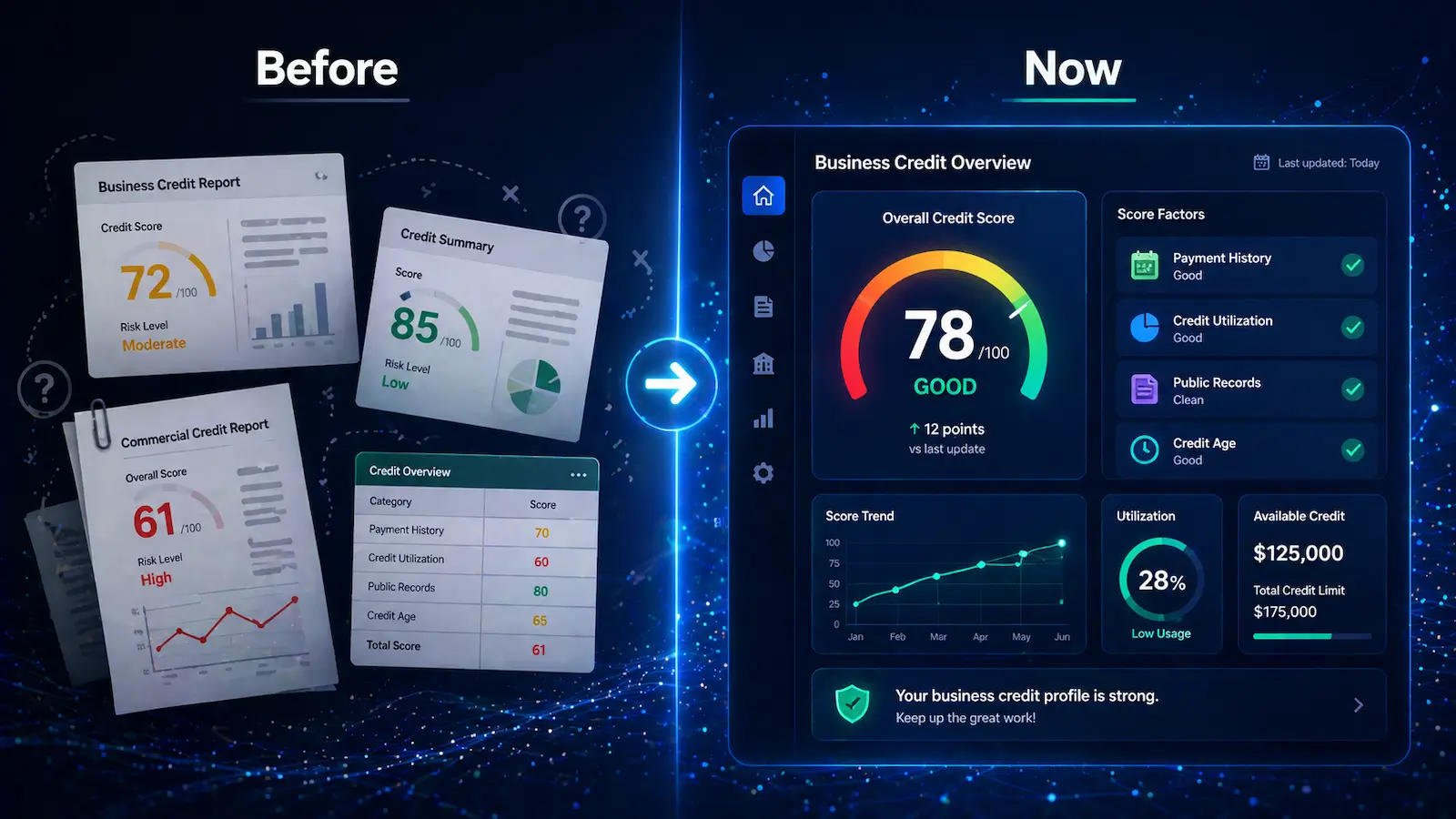
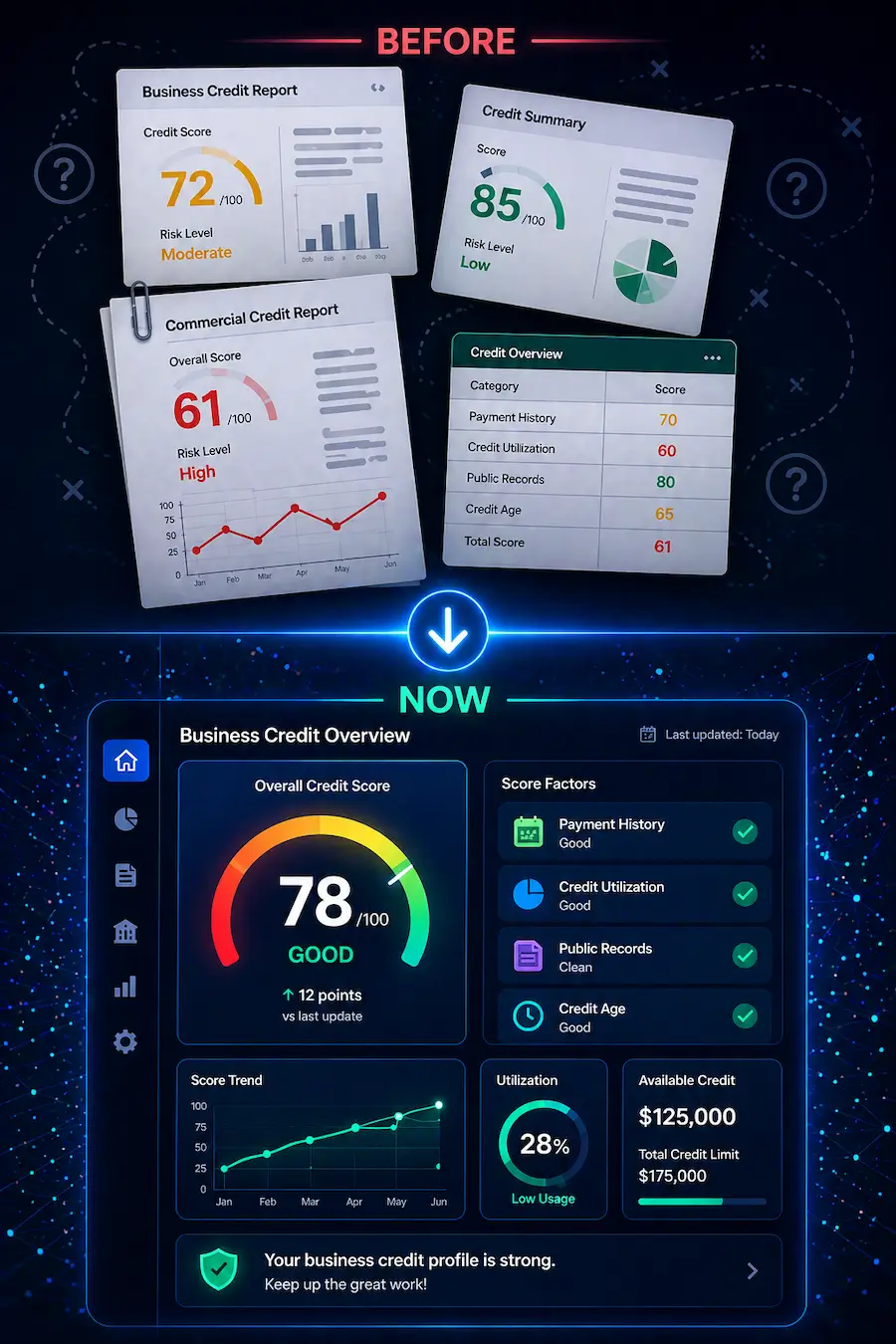
Business Credit Before vs Now
Examples of Business Credit Platforms
Business credit platforms are used in several practical ways:
- Monitoring business credit scores across different systems
- Tracking reports from multiple credit providers
- Receiving alerts for changes such as new accounts or negative marks
- Accessing tools and recommendations to improve credit standing
These features help businesses stay informed and take action before issues grow.
How Business Credit Platforms Work
At a high level, business credit platforms operate by connecting to different credit data sources and organizing that information into a single view.
- Data is pulled from multiple credit systems
- Information is combined into one dashboard
- Platforms generate insights, alerts, and recommendations
This process turns scattered data into usable financial intelligence, making it easier for businesses to understand their position.
This type of data collection and organization is part of a broader shift described in Financial Data Aggregation: The Rise of Connected Financial Data.
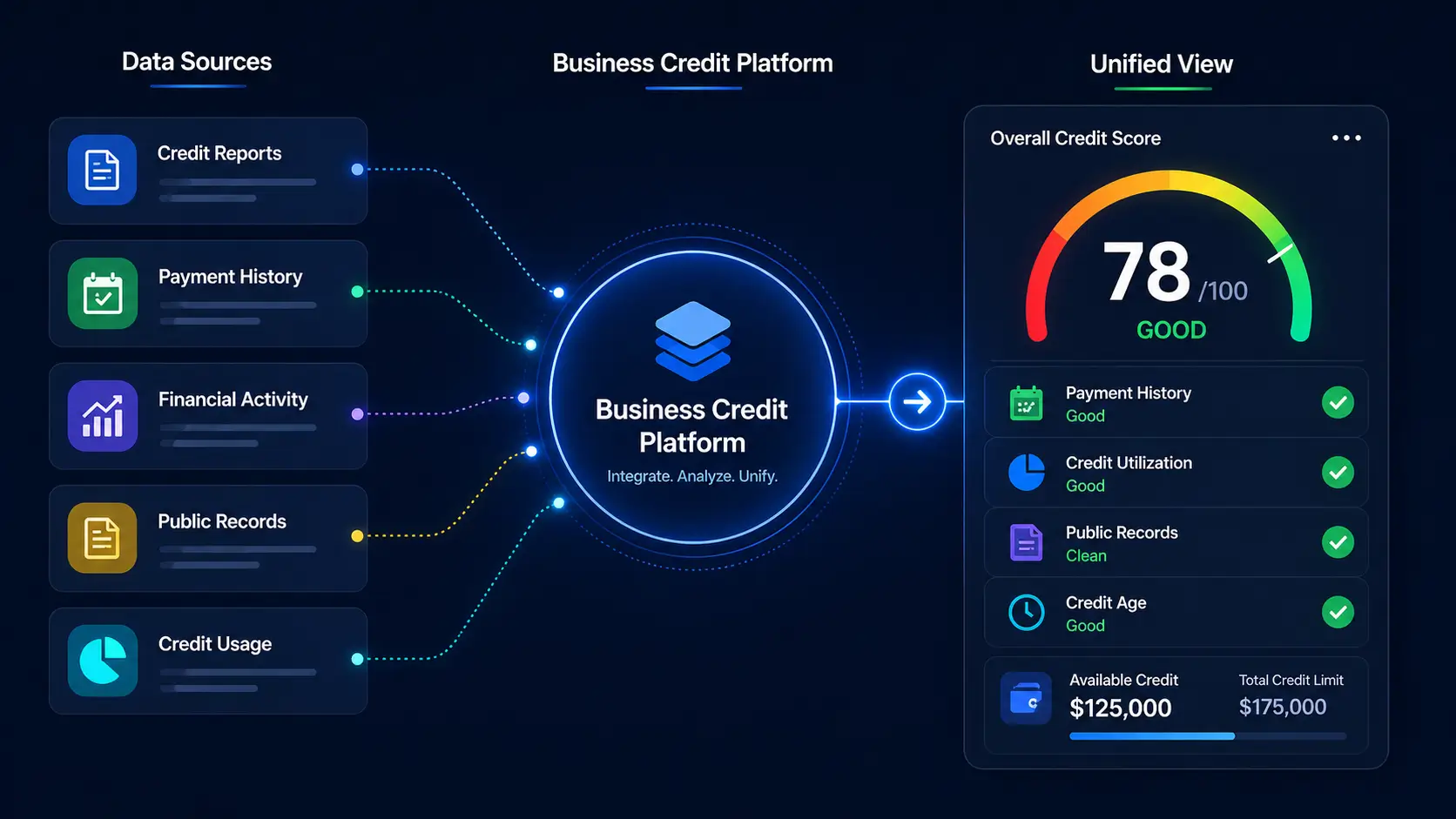
Key Players and Competitors
Business credit platforms operate alongside companies that collect credit data and generate scores. While platforms focus on bringing information together for businesses, other players in this space provide the underlying data and scoring systems that lenders use.
Utah-based companies
 Nav is based in Draper, Utah, and helps businesses monitor, understand, and improve their credit profile through a centralized platform that brings together data from multiple credit systems.
Other companies in this space
- Dun & Bradstreet provides business credit data and scoring systems, including widely used metrics that lenders rely on when evaluating companies.
- Experian offers business credit reports and monitoring tools, contributing data that shapes how businesses are assessed for financing.
- Equifax also provides business credit data and reporting services, adding another layer of information that can influence credit evaluations.
- Creditsafe delivers global business credit reports and monitoring tools, expanding visibility beyond traditional U.S. credit systems.
Why It Matters
Business credit platforms make it easier for companies to understand how they are seen by lenders and take control of their financial profile.
Instead of relying on scattered reports or waiting until a loan application is denied, businesses can see their credit profile in advance, identify issues, and take action early.
Key benefits include:
- Clear visibility across systems — see multiple credit reports and scores in one place
- Improved access to funding — apply with more confidence and preparation
- Early detection of issues — catch problems before they affect applications
- Better financial decisions — use real data instead of guessing
- Time savings — avoid checking multiple systems separately
Overall, business credit platforms turn credit from something reactive into something proactive, giving businesses more control over their financial reputation and future opportunities.

Business Credit Platforms and Loan Marketplaces
Business credit platforms often work alongside lending tools by helping companies understand their eligibility before applying.
Instead of guessing whether they will qualify, businesses can review their credit profile, identify strengths and weaknesses, and make improvements ahead of time. This creates a more informed approach to borrowing and reduces the risk of rejection.
By knowing where they stand, businesses can also target the right types of financing, rather than applying broadly without a clear strategy. This can save time and improve the chances of finding suitable options.
This relationship is part of the model described in Small Business Loan Marketplaces: How Businesses Access Funding
Business Credit Platforms and Open Finance
Business credit platforms are increasingly shaped by how financial data is shared and connected across systems.
In the past, credit data stayed in separate systems, which meant businesses had to rely on partial or outdated information. This made it harder to understand their full credit profile.
Open Finance changes this by allowing data to be securely shared between financial providers, with permission. As a result, business credit platforms can pull in more types of data, such as:
- Bank account activity
- Payment behavior across vendors
- Cash flow patterns
This creates a more complete and dynamic view of a business, rather than relying only on traditional credit reports.
This shift is part of a broader trend described in Open Finance: How Financial Data Is Becoming Shareable and Portable.
Business Credit Platforms and AI in Finance
Business credit platforms are increasingly using artificial intelligence to analyze credit data and generate insights.
Instead of only displaying raw reports and scores, these platforms can identify patterns, highlight risks, and suggest actions based on the data they collect. This helps businesses move from simply viewing their credit to understanding what it means and what to do next.
AI can be used to:
- Detect changes and risks early
- Identify factors affecting credit standing
- Provide recommendations to improve credit
- Analyze trends over time
This makes credit monitoring more dynamic and useful, turning data into actionable insights rather than static information.
This evolution is part of the broader shift explained in AI in Finance: How Artificial Intelligence Is Changing Money and Financial Services.
Limitations
Despite their benefits, business credit platforms have limitations that businesses should understand.
- No single universal score — businesses often have multiple credit scores across different systems
- Data can vary — each credit provider may show different information or scoring methods
- Not all activity is captured — some financial behavior may not be reported or included
- Requires active monitoring — businesses still need to review and manage their credit regularly
These limitations mean that business credit platforms provide guidance, not a complete picture, and should be used as part of a broader financial strategy.

What’s Next (Future of Business Credit Platforms)
Business credit platforms are expected to evolve as financial systems become more connected and data becomes more accessible.
Key trends include:
- More real-time data integration — faster updates from multiple financial sources
- Deeper insights powered by AI — smarter analysis and more personalized recommendations
- Closer integration with financial tools — connections with banking, accounting, and lending platforms
- More unified credit views — gradual movement toward clearer, more consistent credit profiles
As these changes continue, business credit platforms will likely become more central to how companies manage their financial health and prepare for funding.
Conclusion
Business credit platforms are changing how companies track and manage their financial reputation.
What was once fragmented and difficult to access is becoming centralized, clearer, and more actionable. Instead of relying on scattered reports and delayed information, businesses can now see their credit in one place and take action before it affects financing decisions.
By improving visibility and understanding, these platforms help businesses move from reacting to credit outcomes to actively managing their financial profile.
As financial data becomes more connected and tools continue to evolve, business credit platforms are positioned to play a growing role in how businesses prepare for funding, reduce risk, and make better financial decisions.

Disclaimer: Information in this article is for educational purposes and may change over time.