
Introduction
Opening a bank account in Utah is usually quick and straightforward. Most banks and credit unions allow you to open an account online in just a few minutes, while others let you complete the process in person at a local branch.
Whether you are new to Utah, switching banks, or opening your first account, the basic steps are very similar across most financial institutions.
In this guide, we walk through how to open a bank account in Utah, what documents you may need, and the key things to review before choosing a bank or credit union.

Step 1: Choose a Bank or Credit Union
The first step is deciding where to open your account. Utah has a mix of national banks, regional banks, community banks, and credit unions, so the right choice depends on what matters most to you.
Some people prefer banks because they may offer broader branch networks, larger ATM access, and more robust digital tools. Others prefer credit unions for their member-focused approach, local presence, and potentially lower fees.
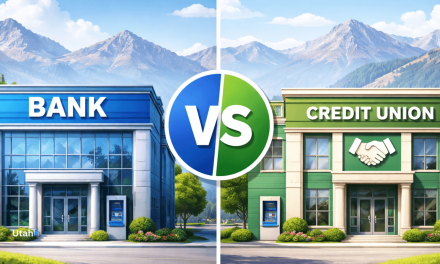
If you want a clearer breakdown of how the two compare, our Bank vs Credit Union in Utah guide explains the main differences in ownership, fees, services, and customer experience.
You can start by comparing some of the best banks in Utah to see which ones offer the right mix of branch access, digital tools, fees, and account options. Deposit at banks are insured by the FDIC. The FDIC (Federal Deposit Insurance Corporation) protects money deposited at banks, insuring accounts up to $250,000 per depositor per bank.
You can also review some of the best credit unions in Utah if you want to compare member-focused institutions that may offer lower fees and a more local approach. Deposits at credit unions are insured by the NCUA. The NCUA (National Credit Union Administration) protects money deposited at credit unions, insuring accounts up to $250,000 per member per credit union.
Before choosing an account, it helps to compare:
- monthly account fees
- minimum opening deposits
- ATM and branch access
- mobile banking features
- customer support and account tools
Step 2: Choose the Type of Account
Most people begin with a checking account, which is designed for everyday spending and payments.
Checking accounts typically include features like a debit card, online banking access, mobile deposits, bill pay, and ATM withdrawals. These accounts are designed to help manage daily transactions such as paying bills, buying groceries, or receiving direct deposits from an employer.
If you want to compare options available across the state, our guide to the best checking accounts in Utah reviews several accounts offered by banks and credit unions.
Many people also open a savings account alongside their checking account so they can separate everyday spending from longer-term savings.
Step 3: Gather the Required Documents
Before opening an account, banks and credit unions must verify your identity. This is a standard requirement for financial institutions across the United States.
Most banks will ask for a government-issued form of identification, such as:
- driver’s license
- state ID
- passport
You will also typically need to provide basic personal information, including:
- full legal name
- date of birth
- address
- Social Security number or taxpayer identification number
If you recently moved to Utah and the address on your identification is different from your current residence, the bank may simply ask for additional proof of address, such as a utility bill or lease agreement.

Step 4: Meet the Minimum Opening Deposit
Some bank accounts require a minimum opening deposit when the account is first created.
Many checking accounts in Utah require between $0 and $100 to open, although some accounts do not require any deposit at all. The amount you deposit simply becomes part of your account balance once the account is active.
It is also important to review the account’s minimum balance requirements and monthly maintenance fees before opening the account. Some accounts waive fees if you maintain a certain balance or set up direct deposit.
Understanding these requirements ahead of time can help you choose an account that fits your everyday banking needs.
Step 5: Apply Online or Visit a Branch
Most banks and credit unions in Utah allow customers to open an account online or in person.
Opening an account online is often the fastest option. Many financial institutions allow you to complete the application in less than 10 minutes, and you may only need to upload a photo of your identification to verify your identity.
If you prefer face-to-face assistance, you can also visit a local branch and open the account with a banker. This can be helpful if you want to ask questions, compare account options, or open multiple accounts at the same time.
Both options usually allow you to start using your account shortly after it is approved.
Step 6: Set Up Your Banking Tools
Once your account is open, you can begin setting up the banking tools that help you manage your money more easily.
Most banks and credit unions provide online banking and mobile banking apps, allowing you to check balances, transfer money, deposit checks, and pay bills from your phone or computer.
You may also want to activate or set up:
- debit card activation
- direct deposit from your employer
- account alerts and notifications
- automatic bill payments
Setting up these features early can make it easier to track spending, avoid missed payments, and manage your account from anywhere.

Opening a Bank Account as a New Utah Resident
If you recently moved to Utah, opening a local bank account can make everyday financial tasks easier. A Utah-based account can help simplify things like receiving direct deposit from an employer, paying rent or utilities, and accessing nearby ATMs or branch locations.
Having a local account may also make it easier to connect with other financial services in the state, such as loans, credit cards, or investment accounts offered by Utah financial institutions.
If you are still getting familiar with the financial landscape in the state, our Financial Guide for New Utah Residents explains how banking, housing costs, and everyday financial services work across Utah.
Final Thoughts
Opening a bank account in Utah is usually simple and quick, and many accounts can be opened in just a few minutes online or during a short visit to a branch.
By choosing the right bank or credit union, gathering your identification, and reviewing the account features and fees, you can set up an account that supports your daily financial needs.
Utah offers a strong mix of national banks, community banks, and member-owned credit unions, giving residents a wide range of options for managing their money.