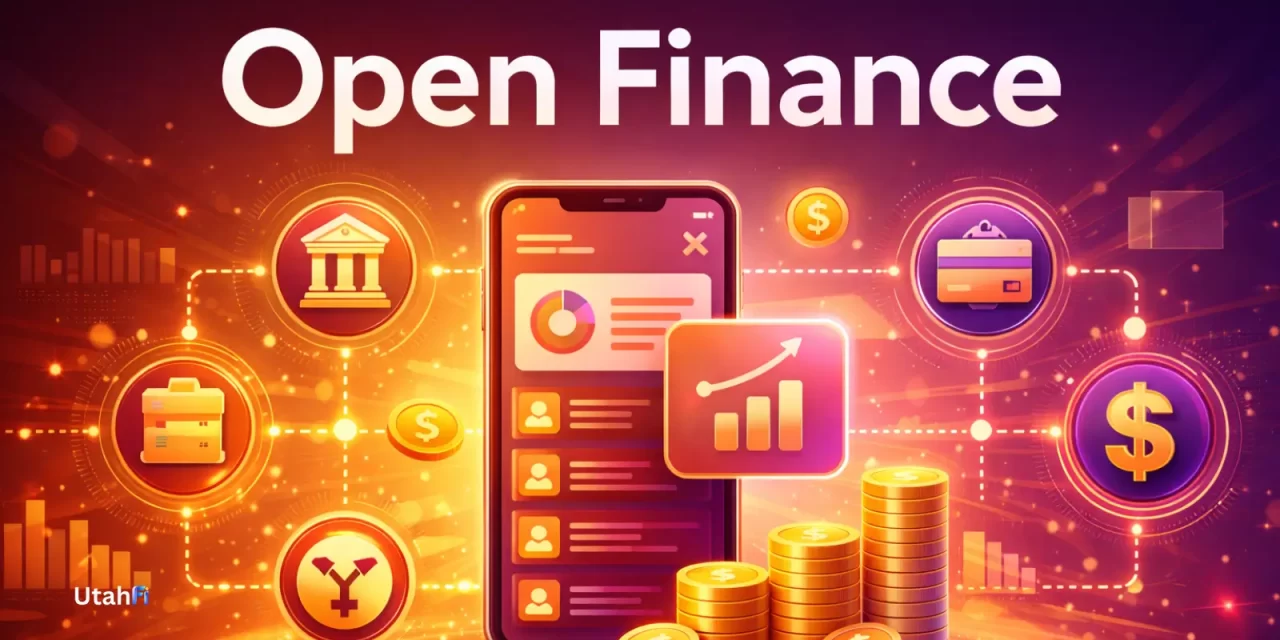
What Is Open Finance
Open finance is a shift toward financial data that can be shared securely between apps, platforms, and institutions. Instead of your financial information staying locked inside a single bank or service, it can now move across different tools when you give permission.
At its core, open finance is about portability and access. Your transaction history, income data, balances, and financial activity are no longer tied to one place. This includes newer data sources like payroll connections, where apps can access verified income and employment data, as explored in Payroll Connectivity: How Apps Access Income Data.
This marks a clear move away from closed financial systems toward connected financial ecosystems, where data flows between services to create faster, more flexible financial experiences.
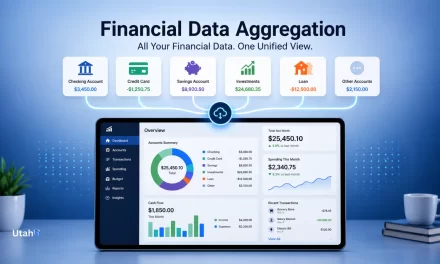
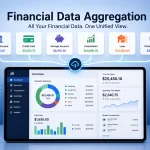
These connected systems also enable technologies like AI in finance, where shared data is used to automate and improve financial decisions. Once that data is shared, it can be combined and organized into a single view, as explained in Financial Data Aggregation: The Rise of Connected Financial Data.
In Simple Terms
Think of your financial data like your contacts on a phone.
In the past, your contacts stayed on one device. If you switched phones, you had to start over.
With open finance, your financial data works more like a cloud account. It moves with you, so you can connect it to different apps and services without starting from scratch.

What Changed (Before vs Now)
Before open finance, financial systems were mostly closed.
Banks and financial institutions controlled access to data. If you wanted to use a budgeting app or apply for a loan, you had to manually enter information, upload documents, or connect through limited and unreliable methods.
Now, systems are becoming connected.
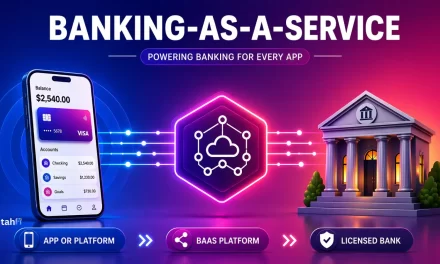
Instead of re-entering the same data, users can link accounts and share information instantly. Financial data flows between platforms in real time, reducing friction and improving accuracy, while financial services are delivered through models like banking as a service.
The shift is from:
- Closed systems → Connected systems
- Manual input → Automated data sharing
- Isolated tools → Integrated experiences
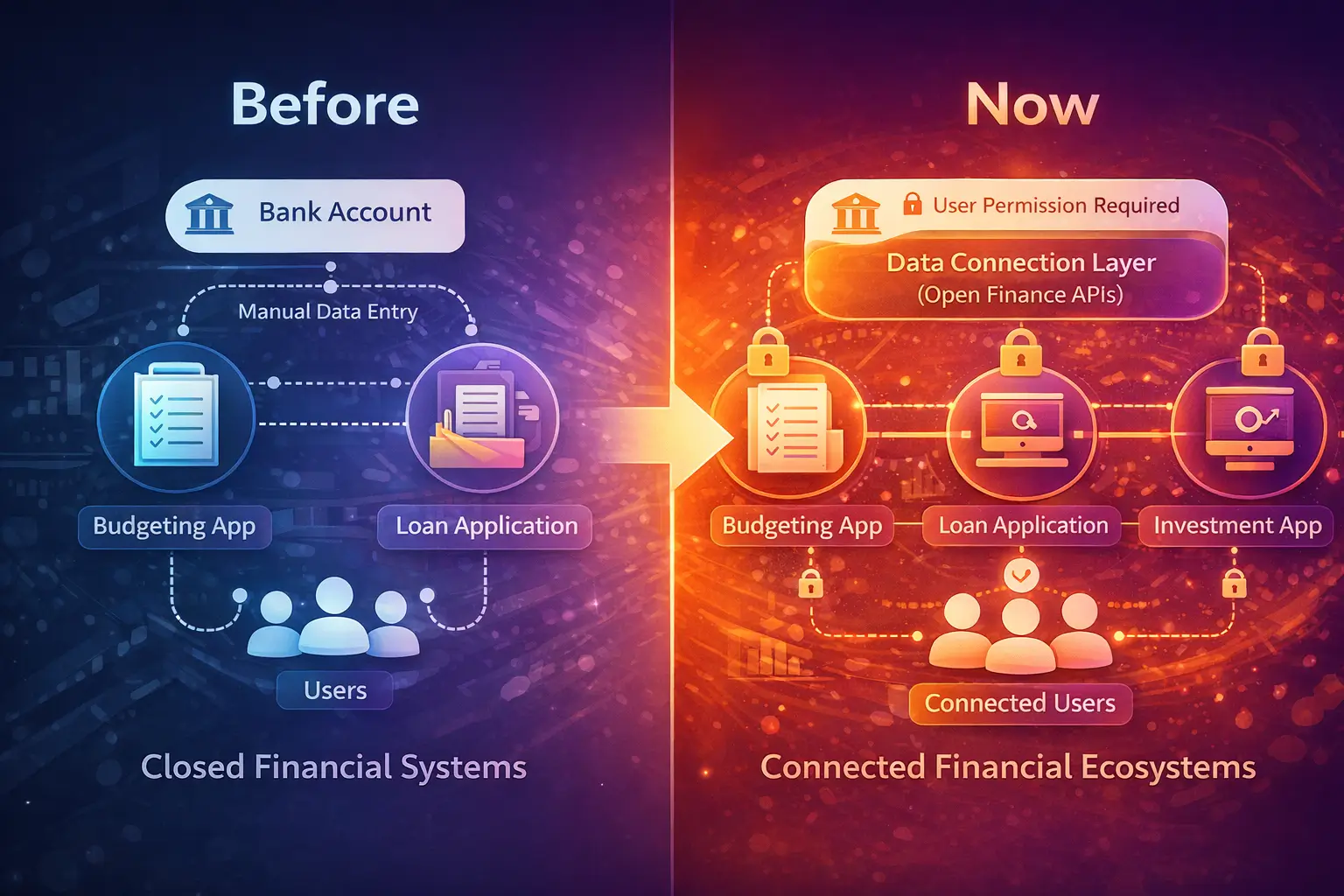
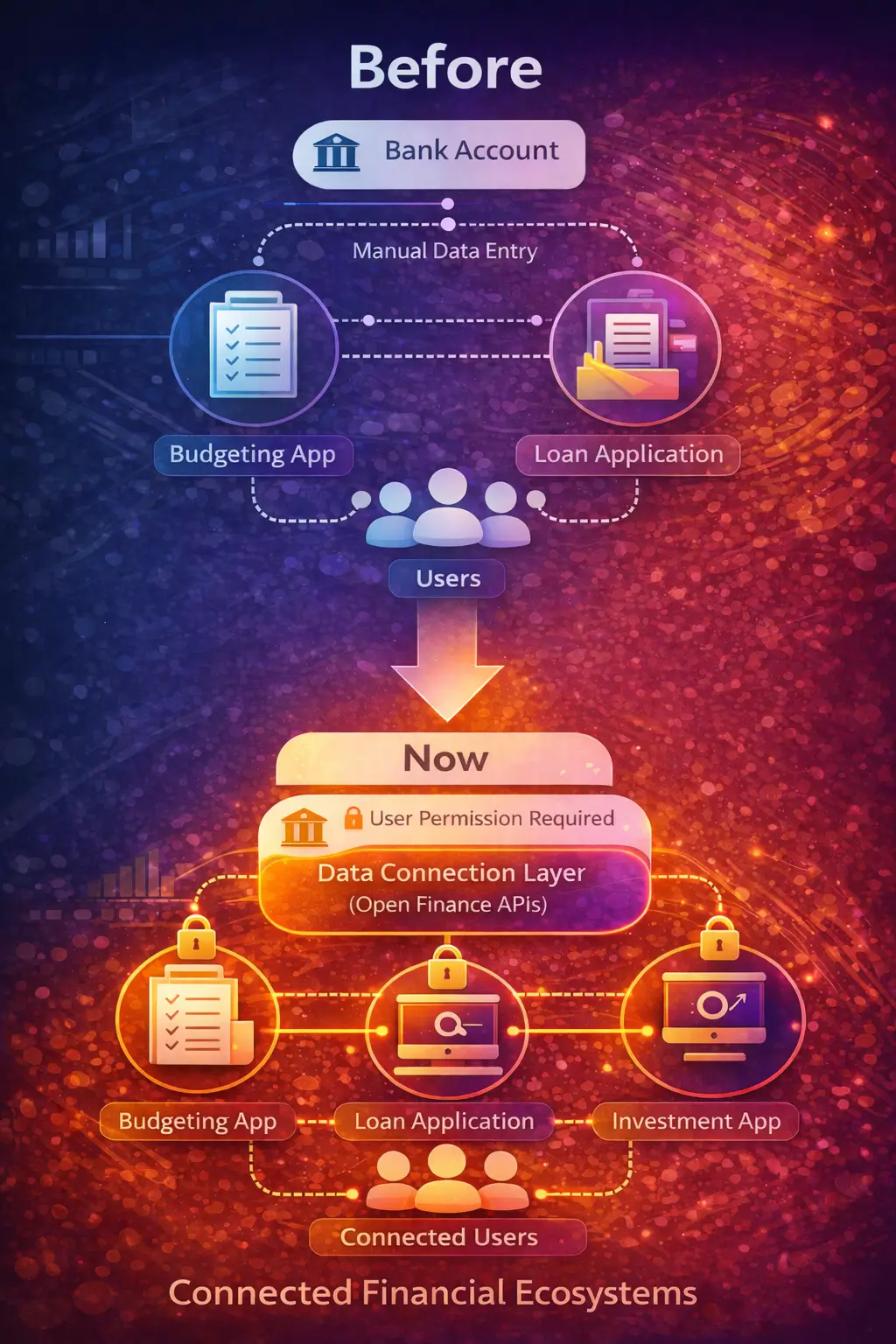
Open Finance Before and Now Comparison
Examples of Open Finance
Open finance shows up in everyday financial tools, even if users don’t always notice it.
Common examples include:
- Budgeting apps that automatically pull in transactions from multiple accounts
- Loan applications that verify income and balances instantly, as used in small business loan marketplaces
- Account aggregation tools that show all accounts in one place
- Investment platforms that connect to bank accounts for funding
- Payment apps that link directly to financial data for faster transfers
These experiences rely on shared financial data, not isolated systems.

How Open Finance Works
At a high level, open finance depends on three key elements:
- APIs (Application Programming Interfaces): These are the connections that allow systems to communicate. APIs enable financial data to move between institutions and apps securely.
- User Permission and Consent: Data is only shared when the user allows it. You decide which accounts to connect and what information can be accessed.
- Data Sharing Between Platforms: Once permission is granted, data flows between systems to power features like insights, approvals, and automation.
Together, these elements create a permission-based data network where financial information can move safely across services.
Key Players and Competitors
Several companies help power open finance infrastructure.
Utah-based and Utah-connected companies include:
- MX Technologies — Focuses on financial data aggregation and user experience tools
- Atomic — Specializes in payroll data access and income verification
- Finicity (Mastercard Open Finance) — Founded in Utah and now part of Mastercard.
Other major competitors include:
- Plaid — Connects apps to bank accounts and financial data, with operations in Utah
- Yodlee — One of the earliest financial data aggregation providers
These companies build the infrastructure that allows financial data to move between systems.

Why It Matters
Open finance changes how people interact with money by making financial services more flexible and connected.
Key benefits include:
- More control over financial data: Users decide where their data goes and how it is used
- Faster applications and approvals: Loans, accounts, and services can be processed using real-time data
- Better tools and insights: Apps can analyze a more complete financial picture
- Increased competition: New companies can build services on top of existing financial systems
This leads to a more dynamic financial environment where services compete on experience, not just access.
Open Finance and Embedded Finance
Open finance and embedded finance are closely related but serve different roles.
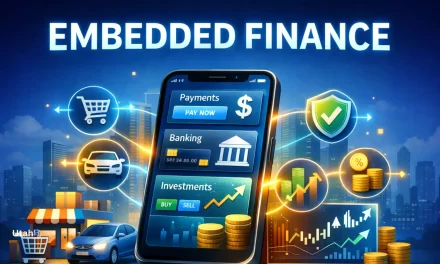
- Open Finance is the data layer
- Embedded Finance is the experience layer
Open finance makes data available, while embedded finance uses that data to deliver financial services inside apps and platforms.
For a deeper look at how this works in practice, see Embedded Finance: How Financial Services Move Into Apps
Limitations
Open finance improves access and flexibility, but it also comes with tradeoffs.
- Privacy and security concerns: More data moving between apps increases the risk of exposure if systems are not properly secured
- Reliance on user permissions: Connections depend on ongoing consent, so features can break if access is removed or expires
- Inconsistent data quality: Financial data can vary by institution, leading to gaps, delays, or mismatched information across apps
- Partial adoption across institutions: Not all banks and financial providers fully support open finance, which limits coverage and reliability
These limitations show that open finance is still evolving and not yet fully standardized.

What’s Next (Future of Open Finance)
Open finance is continuing to expand as financial systems become more connected and data-driven.
Key trends include:
- Broader data sharing: Moving beyond banking into areas like insurance, investments, and payroll
- Integration with AI: Financial tools using shared data to provide smarter insights, automation, and recommendations, as explained in AI in Finance: How Artificial Intelligence Is Changing Money
- More user control: Greater transparency and control over how financial data is accessed and used
- Expansion beyond banking: Open finance becoming part of a larger, fully connected financial ecosystem
The direction is toward a system where financial data is more accessible, more useful, and more controlled by the user.
Conclusion
Open finance represents a shift from closed financial systems to connected data ecosystems.
Instead of financial information being locked inside individual institutions, it can now move securely between apps and services, enabling faster, more flexible financial experiences.
What changed is not just the technology, but control. Users now play a bigger role in deciding how their financial data is used and shared.
As open finance continues to evolve, it is becoming a foundational layer for modern financial services and a key driver of innovation across the industry.
Disclaimer: Information in this article is for educational purposes and may change over time.