What Is Financial Data Aggregation
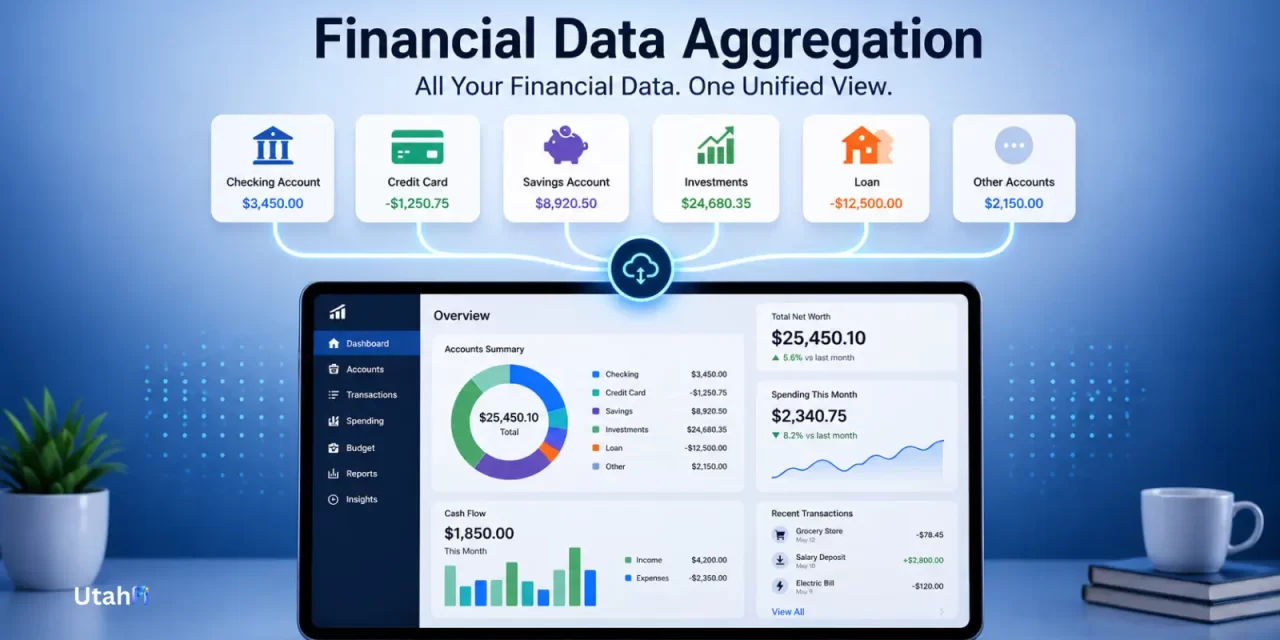
Financial data aggregation is the process of collecting, combining, and organizing financial information from multiple accounts into one unified system. Instead of financial data being stored separately across banks, credit cards, loans, and other platforms, aggregation brings everything together into a single, consistent view.
This changes how financial information is used. Instead of working with isolated data points, aggregation creates a connected dataset that reflects a complete financial picture.
At a system level, aggregation acts as a data layer between financial institutions and applications. It allows platforms to access and work with information across multiple sources without requiring users to manually gather it.
The result is a shift from fragmented financial data to structured, usable, and continuously updated information that can support modern financial tools and decision-making.
In Simple Terms
Think of financial data aggregation as a dashboard for your money.
Just like a car dashboard brings key information into one view, aggregation systems pull data from multiple financial sources and display it in one place.
Instead of switching between apps or tracking things manually, everything is organized automatically into one connected picture.

What Changed (Before vs Now)
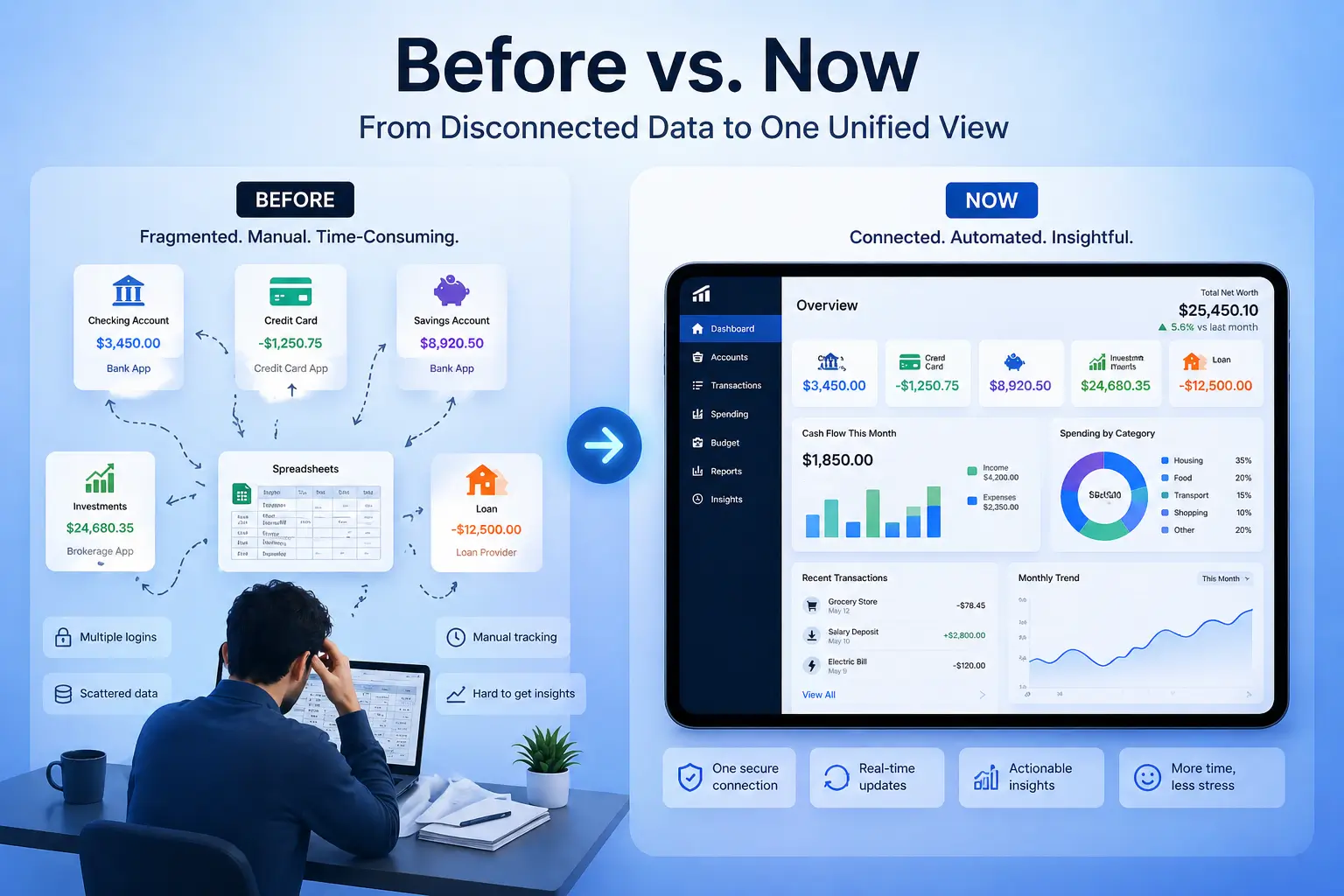
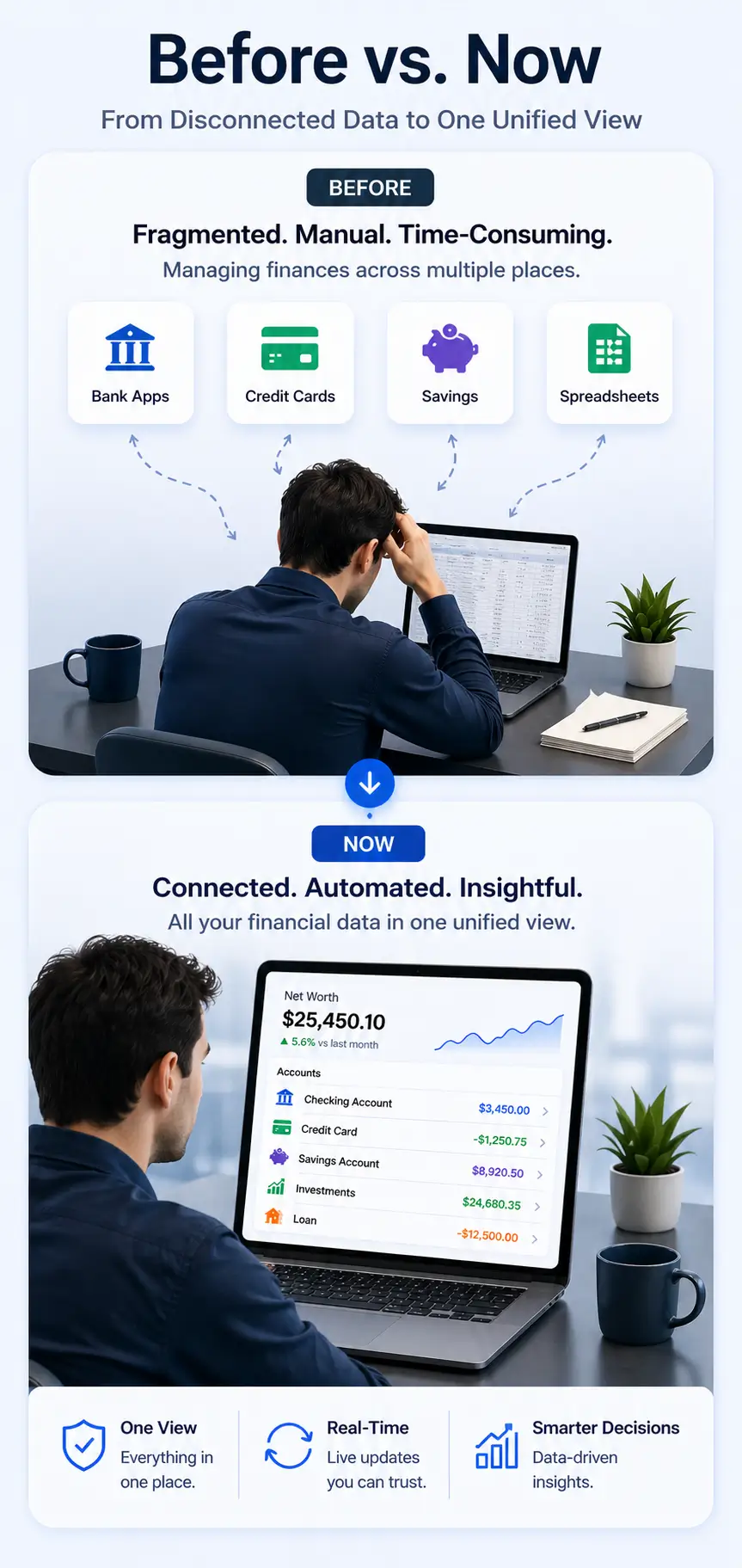
Before financial data aggregation, financial information was separated across multiple systems with no built-in connection.
Each bank, credit card, or financial platform operated independently, which meant users had to log in to different accounts, download statements, or track everything manually. Financial data existed, but it was scattered and difficult to use as a whole.
This created a gap between having data and actually understanding it in context. Decisions were often made with partial information or outdated snapshots.
Now, financial data is becoming connected and continuously updated.
Aggregation allows accounts from different institutions to be linked together, creating a real-time, unified view across all financial activity. Instead of managing separate systems, users and applications can rely on a single, consolidated view of financial data.
This shift moves finance from fragmented information to a connected data system, where financial data can be used instantly for tracking, analysis, and decision-making.
Before vs Now Financial Data Aggregation
Examples of Financial Data Aggregation
Financial data aggregation shows up in many everyday financial experiences.
- Budgeting apps combine multiple accounts to track spending in one place
- Financial dashboards show net worth across accounts, investments, and debt
- Loan applications use real-time income and transaction data instead of manual uploads, including income data accessed through payroll connections, as explored in Payroll Connectivity: The New Way Apps Access Income and Employment Data
- Spending analysis tools automatically categorize transactions across accounts
- Credit reporting systems combine credit account data into a single credit profile
Each of these relies on the same idea: bringing multiple data sources together into one system that can be used immediately.
How Financial Data Aggregation Works
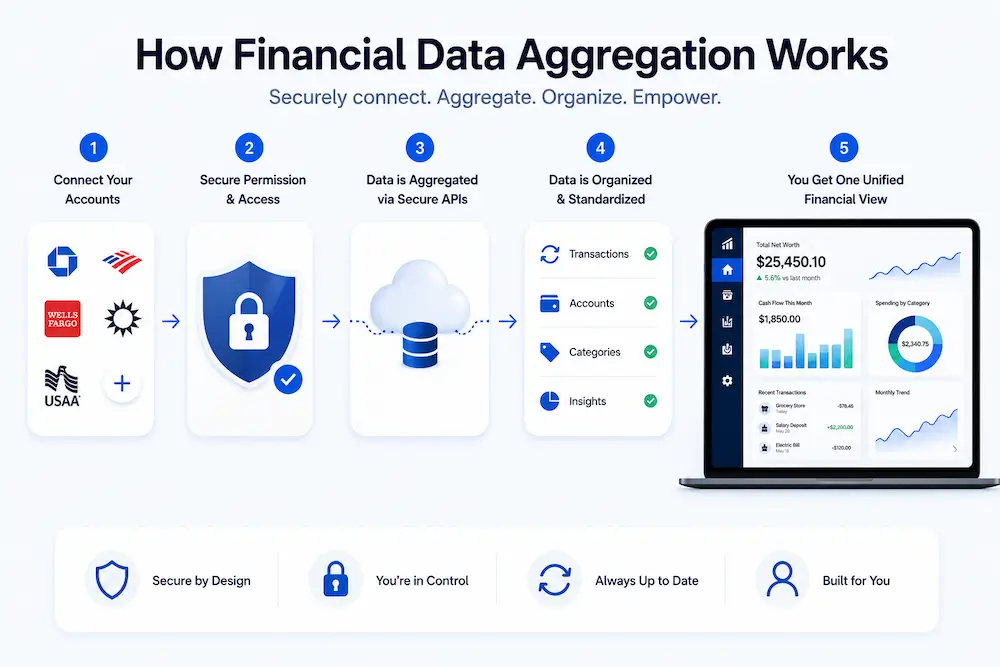
At a high level, financial data aggregation works as a connected system that moves data from multiple accounts into one unified view.
Financial data aggregation is supported by secure data-sharing frameworks, similar to those described by the Consumer Financial Protection Bureau’s overview of open banking and data access, which explains how financial data can be shared safely between institutions and applications.
- Accounts are connected across banks, credit cards, loans, and other financial services
- User permission is granted, allowing secure access to financial data
- Data is retrieved and processed through APIs
- Information is organized into a consistent format
- A unified dashboard is created, displaying everything in one place
This process turns scattered financial data into structured, real-time information that can be used for tracking, analysis, and decision-making.
Key Players and Competitors
Several companies provide the infrastructure that enables financial data aggregation.
From Utah:
- MX Technologies – a major U.S. player in financial data aggregation and data enrichment, working with banks, credit unions, and fintech platforms to create connected financial experiences
Other major competitors:
- Plaid – widely used for connecting apps to financial accounts, especially in developer-focused fintech ecosystems
- Finicity – originally founded in Utah and still maintains operations in the state after getting acquired by Mastercard, focused on data access and financial verification
- Yodlee – one of the earliest providers of account aggregation services, with a broad data footprint
These platforms power many of the financial apps and services used today, acting as the data layer behind connected financial systems.
Why It Matters
Financial data aggregation changes how financial information is used by turning isolated data into a complete, connected view.
- Better financial visibility by combining all accounts into one place
- Faster decisions using real-time, continuously updated data
- Improved user experience with less manual work and fewer logins
- Enables modern financial tools that depend on connected data
Instead of working with partial information, users and platforms can operate with a full financial picture, making analysis, planning, and decision-making more accurate and efficient.
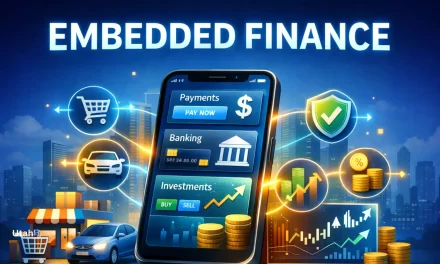
This also supports the growth of financial tools built directly into apps, a model explained in Embedded Finance: How Financial Services Move Into Apps.

Financial Data Aggregation and Open Finance
Financial data aggregation is closely related to Open Finance, but they serve different roles.
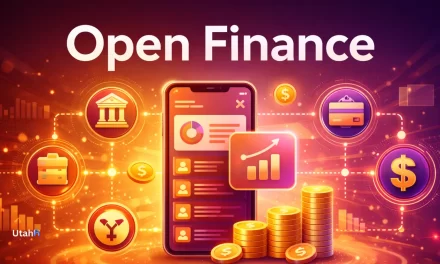
Open Finance focuses on making financial data shareable across institutions, allowing users to grant permission for their data to move between platforms.
Financial data aggregation explains what happens after that data is shared.
Once access is granted, aggregation systems collect, combine, and organize that data into a single, usable view. Without aggregation, shared data would remain fragmented and difficult to use.
In simple terms, Open Finance makes data accessible, and aggregation makes it useful. This relationship is explained further in Open Finance: How Financial Data Becomes Shareable & Portable.
Financial Data Aggregation and AI in Finance
Financial data aggregation also plays a key role in AI in Finance.
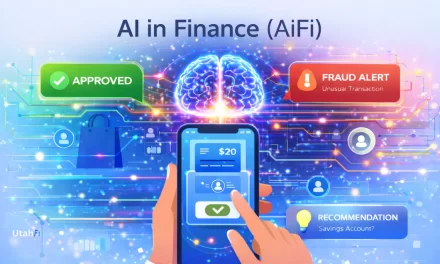
Artificial intelligence systems depend on large amounts of structured data to analyze patterns and make decisions. Aggregation provides that foundation by turning raw financial information into clean, organized datasets that AI models can use.
This allows financial platforms to move beyond simple tracking into automated insights, personalized recommendations, and predictive analysis.
In this way, aggregation acts as the data layer, while AI becomes the decision layer built on top of it. This relationship is explored further in AI in Finance: How Artificial Intelligence Is Changing Money.
Limitations
Despite its benefits, financial data aggregation has limitations.
- Data accuracy issues when information is delayed, incomplete, or inconsistently categorized
- Dependence on integrations between institutions and platforms
- Security and privacy concerns related to sharing sensitive financial data
- Incomplete coverage since not all institutions fully support connectivity
These limitations mean aggregation is powerful, but not always complete or perfectly reliable.

What’s Next (Future of Data Aggregation)
Financial data aggregation is continuing to evolve as financial systems become more connected.
- More real-time data access with fewer delays between transactions and visibility
- Broader data coverage across more institutions, accounts, and financial products
- Deeper integration with AI systems to enable smarter analysis and automation
- More advanced financial insights that go beyond tracking into forecasting and decision support
The direction is toward financial systems that are fully connected, continuously updated, and increasingly intelligent.
Conclusion
Financial data aggregation represents a shift from fragmented financial information to connected financial systems.
By bringing together data from multiple accounts into a single, organized view, aggregation makes it possible to understand, analyze, and act on financial information more effectively.
It also serves as a foundational layer for modern financial tools, enabling everything from budgeting apps to AI-driven insights.
As financial systems continue to evolve, aggregation will remain a core component of how financial data is structured, accessed, and used.
Disclaimer: Information in this article is for educational purposes and may change over time.